“And make us worthy, O Master, that with boldness and without condemnation, we may dare to call upon You, the heavenly God, as Father, and to say: Our Father…” (Orthodox Divine Liturgy)
“At the Savior’s command and formed by divine teaching, we dare to say: Our Father…”
(The Catholic Mass)
“And now, as our Savior Christ has taught us, we are bold to say, Our Father…”
(Book of Common Prayer Service for Holy Communion)
“And he said unto them, Ye are from beneath; I am from above: ye are of this world; I am not of this world.” (John 8:23)
Why is it bold, why is it daring, to call God “Our Father?” We have lost sight of the significance of this even to the point where we have to stop and pause in order even to think of this as a genuine question. The ancient Israelites may have thought somewhat erroneously in assuming that no one can see God and live; but we think wrongly to presume upon the grace of God and to assume that just anybody can call God “Father” without some genuine self-examination. Saint Gregory of Nyssa reminds us that sinfulness in anyone’s life should make it much too daring for any person to presume to say such a thing.
Somewhere in the Psalms the great David says, "Who will give me wings like a dove" (Ps 55:6)? I, too, would dare speak with the same voice. Who will give me such wings as to fly with my mind to the height of the noble meaning of these words? I need to leave the whole earth behind. I must traverse all the intermediary air and come to that ethereal beauty, reaching the stars and beholding their lovely order. Even then I could not remain with the stars. I would need to pass through them and go beyond all material things that change and are in flux. I would want to reach the eternal nature of God, the unshakable power, which has established itself and governs the universe. All things exist and are dependent on the ineffable will of the Divine Wisdom. I would have to remove my mind far from all things that change and are in flux. By attaining to an unchanging and unwavering disposition of the soul, I would first earnestly make Him my friend who is eternal and unchangeable. Only then would I invoke that most intimate Name and say, “Father!”
What quality of soul must the speaker possess to speak of God as “Our Father!” What confidence of spirit! What purity of conscience! To perceive God’s ineffable glory, he must comprehend the mystery of God as far as it is possible from the names that have been conceived of and attributed to God in the Scriptures. He must learn that the divine nature of God is goodness, holiness, joy, power, glory, purity and eternity. Whatever God may be in His deep mystery, He possesses all these eternal and many other conceivable attributes that properly belong to the Divine Nature. Let us say that a person could understand all these endowments of God through the study of Holy Scriptures as well as one’s own creative reflection. Could such a person even then dare to utter the sacred Name and call such a God his own Father? (Saint Gregory of Nyssa, Homily Two - Our Father Who art in Heaven)
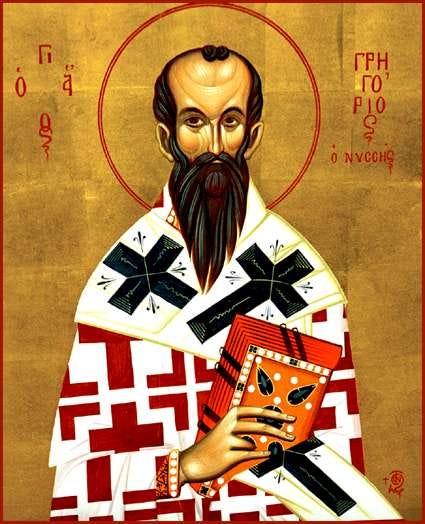
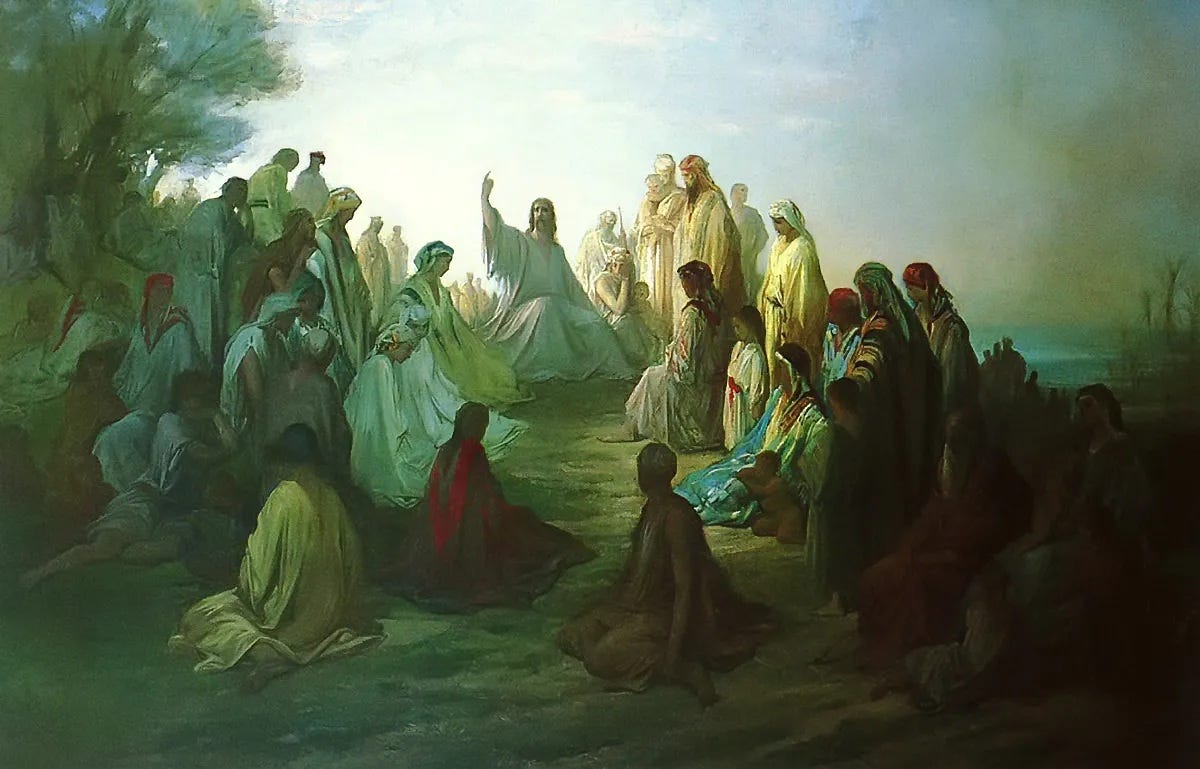
Saint Gregory of Nyssa went on to call for purity of life in the walk of every believer so that each one can be able to call God “Father” in good conscience. Of course, that is all very true. In the same Sermon on the Mount Jesus teaches us not only to trust in God as Father, but also to be like Him:
Ye have heard that it hath been said, Thou shalt love thy neighbour, and hate thine enemy. But I say unto you, Love your enemies, bless them that curse you, do good to them that hate you, and pray for them which despitefully use you, and persecute you; That ye may be the children of your Father which is in heaven: for he maketh his sun to rise on the evil and on the good, and sendeth rain on the just and on the unjust. For if ye love them which love you, what reward have ye? do not even the publicans the same? And if ye salute your brethren only, what do ye more than others? do not even the publicans so? Be ye therefore perfect, even as your Father which is in heaven is perfect. (Matt. 5:43-48).”
There was an understanding in which having one as father possessed the meaning of being of the same kind in character. In the Old Testament, notorious scoundrels, overt and unashamed doers of evil, were called “the sons of Belial (בְּנֵֽי־בְלִיַּעַל).” Belial apparently was not the name of a pagan god or demon, but a word for something worthless. The implication is not so much genetic, as in from what one is generated in terms of bios, but rather in how one lives. We are called to be sons of our Father in heaven; that is, to be in every sense of our daily walk and the intentions of our heart. Whose son will I be in any given situation? How you walk in this world is one way in which you actually choose, in every circumstance, whose son or daughter you are. By your walk you show who is your father.
They answered and said unto him, Abraham is our father. Jesus saith unto them, If ye were Abraham’s children, ye would do the works of Abraham. But now ye seek to kill me, a man that hath told you the truth, which I have heard of God: this did not Abraham. Ye do the deeds of your father. Then said they to him, We be not born of fornication; we have one Father, even God. Jesus said unto them, If God were your Father, ye would love me: for I proceeded forth and came from God; neither came I of myself, but he sent me. Why do ye not understand my speech? even because ye cannot hear my word. Ye are of your father the devil, and the lusts of your father ye will do. He was a murderer from the beginning, and abode not in the truth, because there is no truth in him. When he speaketh a lie, he speaketh of his own: for he is a liar, and the father of it. And because I tell you the truth, ye believe me not. Which of you convinceth me of sin? And if I say the truth, why do ye not believe me? He that is of God heareth God’s words: ye therefore hear them not, because ye are not of God. (John 8:39-45)
What do we make of these words? Is Jesus saying that every unbeliever has Satan as father in some spiritually generative sense? Is He setting apart the Jews as having Satan as their father, thus teaching some kind of collective guilt shared by a whole people (which could not account for all of His disciples and His own mother)? Or is He not rather saying that one’s deeds show to whom he or she is aligned, deeds by which someone shows forth the same traits, characteristics, and resemblance of another to whom one lives in obedience? Obviously, it is the latter. By one’s choices he resembles, with the same traits, either God’s kinship or the devil’s. But the devil has no power to give life, and so to be the children of the devil cannot be rightly interpreted as meaning that there is a spiritually generative sense in which one is in any way the offspring of a being who is impotent and unable to produce offspring, whether with bios or zoe. But his evil can be imitated, and so by thought, word, and deed, when effected with evil intention, one can choose to adopt the devil as father by sinful actions.
Almighty God, who hast given us thy only-begotten Son to
take our nature upon him and as at this time to be born of a
pure virgin: Grant that we, being regenerate and made thy
children by adoption and grace, may daily be renewed by thy
Holy Spirit; through the same our Lord Jesus Christ, who
liveth and reigneth with thee and the same Spirit ever, one
God, world without end. Amen. (Christmas Collect, Book of Common Prayer)
The principle of the whole matter is adoption. Those who seek to kill Christ, which at this time after His resurrection from the dead to a human nature of immortality is impossible (Romans 6:9), can, at best, kill only the voice of conscience by which the Holy Spirit speaks to every human heart. The choice to kill the voice of one’s conscience is to adopt the devil as one’s father. To apply this to one group of people called “the Jews” is absurd; but it is also inaccurate to apply it to everyone who has not yet become adopted by grace to become one of God’s children. Many who remain lost in darkness are not, thereby, “totally depraved.” God includes all in unbelief, that He might have mercy on all (Romans 11:32). The words “All have sinned…” does not justify the overstated and exaggerated doctrine of “The Total Depravity of Man.”
But, even so, an unbeliever whose deeds do not necessarily mean that he adopts the devil as father, because such a person tries to live according to his conscience, has no right to call God “Father.” We see in the Old Testament that Israel had honorable allies even among those who were not in the covenant. So also we see in the Book of Acts a difference between one “…The deputy of the country, Sergius Paulus, a prudent man (Acts 13:7),” but still a man yet to be born from above as a child of God, and one Elymas Barjesus a sorcerer who willfully opposed the Holy Spirit. The sorcerer was struck blind miraculously when Saint Paul described him, addressing him as, “O full of all subtilty and all mischief, thou child of the devil, thou enemy of all righteousness, wilt thou not cease to pervert the right ways of the Lord? And now, behold, the hand of the Lord is upon thee, and thou shalt be blind, not seeing the sun for a season (Acts 13:10,11).” But of Sergius Paulus we read, “Then the deputy, when he saw what was done, believed, being astonished at the doctrine of the Lord (Acts 13:12).” Yet, even though we see no indication that the deputy, Sergius Paulus, believed prior to hearing the Gospel and beholding a miracle (and I have seen such miracles of chastening that have silenced opposition to the preaching of the Gospel), he was not called a “child of the devil” nor “an enemy of all righteousness,” but rather “a prudent man,” acknowledging a virtuous quality in him even before he came to faith in Christ. So, it is not a theological truth to ascribe to all unbelievers the status of being “Sons of Belial.” And yet, before he came to believe in Christ, a prudent man though he was, he could not yet rightly call God “Father.”
Blessed be the God and Father of our Lord Jesus Christ, who hath blessed us with all spiritual blessings in heavenly places in Christ: According as he hath chosen us in him before the foundation of the world, that we should be holy and without blame before him in love: Having predestinated us unto the adoption of children by Jesus Christ to himself, according to the good pleasure of his will, To the praise of the glory of his grace, wherein he hath made us accepted in the beloved (Eph. 1:3-6).
For as many as are led by the Spirit of God, they are the sons of God. For ye have not received the spirit of bondage again to fear; but ye have received the Spirit of adoption, whereby we cry, Abba, Father. The Spirit itself beareth witness with our spirit, that we are the children of God: And if children, then heirs; heirs of God, and joint-heirs with Christ; if so be that we suffer with him, that we may be also glorified together (Romans 8:14-17).
For God so loved the world, that he gave his only begotten Son, that whosoever believeth in him should not perish, but have everlasting life (John 3:16).
It is absolutely necessary for us to notice that when Jesus our Lord taught us to pray “Our Father,” that except for this one occasion of telling us what to say in prayer, the words “Our Father” are never attributed to Him in any verse of the whole Bible. Always He says either, “My Father,” reminding us of His unique relation to the Father, or He says “Your Father,” often “Your Father who is in Heaven.” When Jesus says “My Father” it is because He is the only begotten Son of the Father. The word “Begotten” is iconic, speaking of the eternal procession of Being that is beyond our comprehension. Already we have seen from John 8:42, “I proceeded forth and came from God; nor have I come of Myself, but He sent Me.” Although the Church more often has reserved the use of the word “Proceed” to the relation between the Father and the Holy Spirit (and the word in John 8:42 is ἔρχομαι - erchomai) rather than ἐκπορεύομαι - ekporeuomai as used for the Holy Spirit in John 15:26), it is a fitting word. Generally, the word used that is translated as “begotten,” is μονογενής (monogen’ēs), a word that contains, as we see, gen’es, that is that the Son, that is the Logos, is generated eternally by the Father. This did not happen in something akin to time; the Son is not a creation of God, and neither is the Holy Spirit. It is all a mystery of the ever-present eternal Now that Jesus is the only begotten Son of the Father. And it is only in the one begotten Son that we are so fully adopted that it is a new birth from above. It is such a thorough adoption that God the Father’s Name is not only on our adoption papers, but also the full Name of the Father and of the Son and of the Holy Ghost is on our spiritual birth certificate on Heaven, giving each of us the common new name In Christ (See Romans chapter six).
Therefore, seeing as God is our Father by this very thorough adoption and grace, every time that we say “Our Father who art in Heaven,” we confess by being so bold, ever so daring through faith in His revealed grace, that Christ is divine, fully God and fully man. Therefore, because he was born on Earth as a human being, and because He carried us through the death brought on by our sin, and carried into His new immortal life, we do indeed dare with boldness to say “Our Father who art in Heaven.” it is fitting to mention Heaven because we have been born of water and of the Spirit. So, we begin to be, even in this life, heavenly beings in Christ.
We are left then to remember two things. We are sons already, Children of God, and therefore the full manifestation of our adoption remains for the Day when Christ comes again in glory to infuse the fullness of immortality into each of us. The other is, because God is our Father, our thoughts words, and deeds ought to be those things in which His family resemblance is visible in this world. Let us do the deeds of our Father, and “Therefore be merciful, just as your Father also is merciful (Luke 6:36).” We are bold because the blood of the great High Priest is on the Mercy Seat, the Throne of Grace. We are bold if our conscience does not accuse us because “Herein is our love made perfect, that we may have boldness in the day of judgment: because as he is, so are we in this world (I John 4:17).” In Christ, that new surname we share, God is our Father.

No comments:
Post a Comment