(From the archives, 2009)
The chapters that follow speak of the deepest and most significant mysteries of God revealed in Christ, covering everything to do with the central doctrine of the Incarnation…Hooker has written about the Incarnation as the foundation, the building and completion of our salvation; and by receiving Christ himself, by partaking of the Risen Lord Jesus himself, do we have life.
“As oft as we mention a Sacrament properly understood, (for in the writings of the ancient Fathers all articles which are peculiar to Christian faith, all duties of religion containing that which sense or natural reason cannot of itself discern, are most commonly named Sacraments,) our restraint of the word to some few principal divine ceremonies importeth in every such ceremony two things, the substance of the ceremony itself which is visible, and besides that somewhat else more secret in reference whereunto we conceive that ceremony to be a Sacrament. For we all admire and honour the holy Sacraments, not respecting so much the service which we do unto God in receiving them, as the dignity of that sacred and secret gift which we thereby receive from God. Seeing that Sacraments therefore consist altogether in relation to some such gift or grace supernatural as only God can bestow, how should any but the Church administer those ceremonies as Sacraments which are not thought to be Sacraments by any but by the Church?”
(Richard Hooker, The Laws of Ecclesiastical Polity, Book V, 50, ii)
Well into his Laws of Ecclesiastical Polity (of the Church of England), Richard Hooker (1554 - 1600) opens a new chapter with this brief paragraph about the sacraments to launch us into some of the best samples of his writing. The chapters that follow speak of the deepest and most significant mysteries of God revealed in Christ, covering everything to do with the central doctrine of the Incarnation. Much of what follows about the Person of Christ in two natures would later be almost rewritten in modern English by E.L. Mascall 1 to help modern readers comprehend the Unity of Christ’s Person in two full and distinct natures. Mascall and Hooker before him, drew from the Council of Chalcedon to teach the Biblical truth of the Incarnation in language suited for their respective eras.
Frankly, none of the Reformers surpassed Hooker’s achievement in these chapters of Book V, and none of the Fathers wrote anything better in one passage. These chapters of Book V ought to be read and studied, in fact along with Scripture, read, marked, learned and inwardly digested. For example, he summarizes briefly but fully that, while it is true that Deity cannot suffer, and human nature cannot share in Divine glory, yet as Jesus of Nazareth the Person of the Son, who is fully Divine, did suffer, and the same Person receives all glory. In language that is reminiscent equally of St. Anselm and of the Greek Fathers (not to mention St. Paul), Hooker wrote so simply, making theology look easy:
To Christ we ascribe both working of wonders and suffering of pains, we use concerning him speeches as well of humility as of divine glory, but the one we apply unto that nature which he took of the Virgin Mary, the other to that which was in the beginning. (V, 53, i)
If therefore it be demanded what the person of the Son of God hath attained by assuming manhood, surely, the whole sum of all is this, to be as we are truly, really, and naturally man, by means whereof he is made capable of meaner offices than otherwise his person could have admitted, the only gain he thereby purchased for himself was to be capable of loss and detriment for the good of others. (V, 54, iv)
The honour which our flesh hath by being the flesh of the Son of God is in many respects great…Finally, sith God hath deified our nature, though not by turning it into himself, yet by making it his own inseparable habitation, we cannot now conceive how God should without man either exercise divine power, or receive the glory of divine praise. For man is in both an associate of Deity. (V, 54, vi)
Language about the Incarnation must stoop as low as the dust of the earth and soar as high as heaven. Otherwise, the whole point is lost. Christ suffered all detriment and agony that human sin deserved; Christ is glorified with the glory that He shared with the Father before the world was. 2 So too we, taken to the cross receive the forgiveness we need, and taking up the cross follow the Son of Man in reckoning ourselves dead indeed unto sin 3. Human nature that cannot share in the glory of God, nonetheless does share in Divine glory 4 in the Person who is One in two complete natures. Hooker writes of atonement and of theosis (or deification) with relative ease, moving naturally and easily between these two complementary doctrines of Scripture, because he is focused on the greatest revelation we have been given, namely the Incarnation of the Word.
He is able, therefore, to focus on the Incarnation and with it the doctrine of the Trinity, and every doctrine that we need to understand if we are to appreciate the salvation we have been given in Christ, and that to which we look forward. In the dust of the earth, we have been taken to the cross; in Christ’s glory as God, we look ahead to an inheritance we cannot even now perceive except with metaphors and the symbolism of earthly language, knowing that it is all surpassed in what awaits those who attain to the resurrection of the dead and the life of the world to come.
Sacraments and the Incarnation
What Hooker did, however, was to sandwich this breathtaking writing about the Incarnation, and its glorious effects, between his words about the sacraments. This excellent passage about the Word made flesh was a part of his sacramental theology, showing that he saw no way to explain the Laws of Ecclesiastical Polity regarding the sacraments without appreciation for the theology of the sacraments themselves, and the theology of the Incarnation that must be the foundation for a true understanding of what the sacraments are.
So, we must pause a moment to think about a few things. To be practical, some disputes have long been running between people who count the sacraments, and these disputes have been among those who fall into the trap of Nominalism. In Hooker’s own tradition, which in time came to be called Anglicanism, many had taken the Anglican Formularies to mean that only two sacraments exist. And yet the Book of Common Prayer contains a Catechism that provides an explanation (specifically to Article XXV of the Thirty-Nine Articles of Religion of the Church of England): namely, that two sacraments alone were both established by Christ himself (in the flesh, on earth) and are “generally necessary to salvation.” Whether or not one is an Anglican, it is helpful to understand the idea of sacraments, and how they are recognized, in light of Article XXV itself. Let us look at the opening paragraphs of that Article:
SACRAMENTS ordained of Christ be not only badges or tokens of Christian men’s profession, but rather they be certain sure witnesses and effectual signs of grace and God’s good will towards us, by the which He doth work invisibly in us, and doth not only quicken, but also strengthen and confirm, our faith in Him.
There are two Sacraments ordained of Christ our Lord in the Gospel, that is to say, Baptism and the Supper of the Lord.
The first paragraph rules out any suggestion that sacraments are, in Hooker’s terminology, “bare signs.” Reducing them to ineffectual ceremonies that are merely symbolic, or merely acts of obedience (”badges or tokens of Christian men’s profession”), is simply incapable with the clear and obvious meaning. If they had left us with only “certain sure witnesses” we may have room to see the sacraments as less than “generally necessary” and means of grace. But, they did not leave us only with that, but went on to say, “effectual signs of grace and God’s good will towards us, by the which He doth work invisibly in us, and doth not only quicken, but also strengthen and confirm, our faith in Him.” Signs, yes, but effectual. This takes us back to what Hooker wrote in the first quotation above: “Seeing that Sacraments therefore consist altogether in relation to some such gift or grace supernatural as only God can bestow, how should any but the Church administer those ceremonies as Sacraments which are not thought to be Sacraments by any but by the Church?” (Emphasis mine)
Looking at the words of paragraph two in the Article, we must ask, what sets these two sacraments apart? The answer has been given already, and is stated ever so simply. Only these two sacraments have been established by Christ in the Gospel. Of the other five, those sacraments that are not “generally necessary to salvation,” and some of which are not meant for everybody (e.g., marriage and orders), the New Covenant has empowered them with deeper and richer meaning; but everyone of those five are in the Old Testament, beginning with marriage during the time of Man’s innocency. 6 Moses gave the Hebrews laws for the ordination of the Levitical priests, and did himself ordain Joshua prefiguring Apostolic Succession. 7 When Samuel anointed David, the shepherd boy and future king was filled with the Holy Spirit and began to be a prophet, prefiguring Confirmation. 8 Absolution belonged to the Levitical priests who heard confession and made atonement. 9 It was prefigured also by the Prophet Nathan. 10 Healing is a constant theme in the Old Testament, with Levitical priests who cleansed the lepers by washing, sacrifice and anointing (leaving after Baptism nothing for the Church to follow except the anointing and prayer), 11 as well as the miracles of Elijah and Elisha.
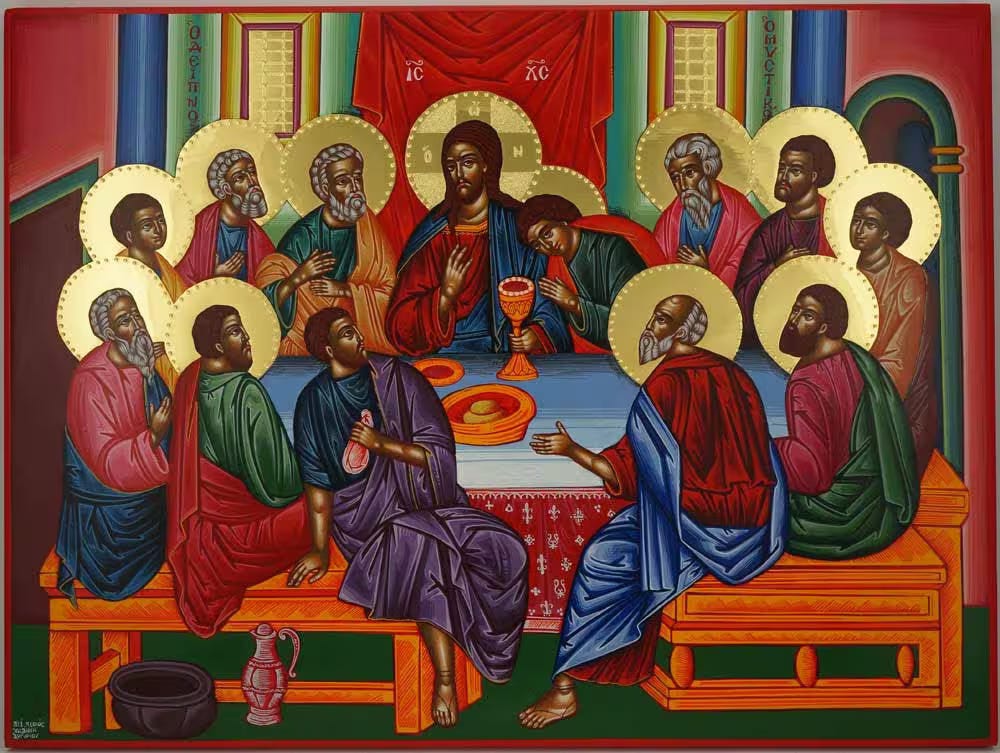
But, Baptism and the Lord’s Supper were established as new sacraments by Christ himself on earth. Although Baptism came from the Ritual baths by which an Israelite was cleansed from impurities of uncleanness, in the New Testament it is truly a new thing in that it is not only cleansing, but life giving. Although the Lord’s Supper is prefigured in the Covenant meal, 12 as well as the eating of sacrifices, it is truly new in that it is life giving, 13 and it is the Communion not with a dead sacrifice, but with the Body and Blood of the Risen Christ. Therefore, it fulfills the meaning of all sacrifices and also the Presence of God (or Shekinah) in the temple, these having been types.
So, the Article continues:
Those five commonly called Sacraments, that is to say, Confirmation, Penance, Orders, Matrimony, and Extreme Unction, are not to be counted for Sacraments of the Gospel, being such as have grown partly of the corrupt following of the Apostles, partly are states of life allowed in the Scriptures; but yet have not the like nature of Sacraments with Baptism and the Lord’s Supper, for that they have not any visible sign or ceremony ordained of God.
I have been criticized for my understanding of the simple phrase “commonly called.” To modern ears it can come across as a negation: “This is what people have said.” But the phrase was understood as an affirmation, and this we see from its usage throughout titles in editions of the Bible (e.g. The First book of Samuel, Commonly called The first Book of the Kings), the 1549 Book of Common Prayer (THE SUPPER OF THE LORDE AND THE HOLY COMMUNION, COMMONLY CALLED THE MASSE), or the 1662 Book of Common Prayer (The Nativity of our Lord, or the Birth-day of Christ, Commonly called Christmas-Day). That this phrase, “commonly called” should be seen as an affirmation in all these usages, but as a negation only in Article XXV, is simply absurd. Nonetheless, here we have Hooker as our witness, that such a phrase would have been understood only as affirming rather than negating: “...for in the writings of the ancient Fathers all articles which are peculiar to Christian faith, all duties of religion containing that which sense or natural reason cannot of itself discern, are most commonly named Sacraments.”(Emphasis mine)
That these five are sacraments, but not sacraments of the Gospel, is not difficult, therefore, to understand. Neither is it a problem that “they have not any visible sign or ceremony ordained of God.” The Church may administer them with ceremonies that are established lawfully from Right Reason. 14 But, in Baptism we have been given a ceremony that Christ himself established, if only by commanding the use of a Form: “Go ye therefore, and teach all nations, baptizing them in the name of the Father, and of the Son, and of the Holy Ghost.” 15 Also, though the Church was given the Right Reason to establish valid Forms, the Supper of the Lord was established to be carried out with at least as much ceremony as Christ himself used, by blessing the bread and the Cup, by breaking the bread, and by giving it to his disciples as his Body and Blood. “...this do in remembrance of me...this do ye, as oft as ye drink it, in remembrance of me.” 16 What is this that we do? The bread is blessed and broken, then it must be taken and eaten with appreciation of what it has become by the word of God. The cup is blessed, and then we must drink from it, mindful of what the word of God has made it. And, as Cranmer and Hooker both emphasized, unless and until the bread is eaten, and unless and until the cup is received, the ceremony is incomplete, Christ having established at least these minimum standards of words and action as a ceremony with Form, Matter and Intention.
Other phrases from the confusing (to modern readers) third paragraph of Article XXV are easily explained. For example, “a corrupt following of the Apostles” does not mean corruption in a moral sense, but in the sense of a corrupted manuscript, mistranslated or suffering deletions. What except for “a corrupt following of the Apostles” could have turned the Anointing for Healing into Extreme Unction (i.e. “Extreme” meaning not to be used until one is about to die)? Yes, the Bible, in the Epistle of James, provides a basis for anointing the dying, in that the sacrament carries with it the grace of Absolution, and in that the greatest healing will be the resurrection of the dead on the Last Day. “Is any sick among you? let him call for the elders (πρεσβύτερος) of the church; and let them pray over him, anointing him with oil in the name of the Lord: And the prayer of faith shall save the sick, and the Lord shall raise him up; and if he have committed sins, they shall be forgiven him.” 17 Nonetheless, by what other than “a corrupt following of the Apostles” did this sacrament become reserved only for the dying, and with only death as the expected outcome? Added to this idea was ridiculous and burdensome Canon Law, requiring the one who was anointed, should he live and recover against expectation, to be a lifelong celibate- even if he were twenty-five years of age, and had become sick on his wedding night.
When the Preface to the Ordinal stated the Church’s Intention to continue Three Orders of Ministry, it corrected a “corrupt following of the Apostles” by which Holy Orders had corruptly grown beyond the three that were “from the Apostle’s times,” namely Bishops, Priests and Deacons. The Preface to the Ordinal restored Catholic Truth in this matter, and the Church of Rome has followed our example. Before this, the Holy Orders were seen as embracing subdeacons, exorcists, and in some places, even acolytes (these may rightly exist ceremonially for practical reasons, but ought not to be confused with the Holy Orders).
Of course “states of life allowed in the Scriptures” is quite obviously referring to the choice between the sacrament of Matrimony or a life of celibacy, whether temporary when someone hopes to marry, or permanent if one chooses, as Queen Elizabeth did, to remain a consecrated virgin, as well as consecrated celibate widows and widowers (the only states of life allowed in the scriptures).
Reception
But, having all of this now clarified, what matters most in Article XXV from the Cranmerian position of Hooker, is what follows:
The Sacraments were not ordained of Christ to be gazed upon or to be carried about, but that we should duly use them. And in such only as worthily receive the same, have they a wholesome effect or operation: but they that receive them unworthily, purchase to themselves damnation, as Saint Paul saith.
It is the use, that is the reception, of the sacraments, that matters most in Anglican theology, as it restored the true Faith of, in the words of Queen Elizabeth I, the “earliest bishops and Catholic fathers.” And this is why Hooker builds his sacramental theology only on the foundation of the Incarnation. The great emphasis in sacramental theology is drawn out of the Bible. From earliest times, the Church began to see these seven specific mysteries as having in them certain shared properties. All were revealed by God. All involved human action that made use of Matter with Form and Intention. All seven had predictable results because of God’s promises. All impart grace, even if only the gift of a state of sanctified married life as part of God’s creation of human nature. 18
The sanctification of these material and earthly things, not only good through creation, 19 but holy through Christ’s own taking of a physical body (inasmuch as He made human nature forever one with his eternal, uncreated Divine Person), provides the necessary condition for God to use earthly things as vehicles of heavenly things, as nothing less than means of Divine grace. Sanctification of our natural lives, our salvation from sin and death, and even the hope of sharing Divine glory with the Risen Christ, are all written now into the very creation itself by the Word made flesh. God both takes back His creation from disorder and evil and gives us eternal life as partakers of the Divine Nature. 20
Hooker has written about the Incarnation as the foundation, the building and completion of our salvation; and by receiving Christ himself, by partaking of the Risen Lord Jesus himself, do we have life. This is where receiving, “using,” the sacraments of Baptism and the Lord’s Supper are glorious indeed, as he gives himself to us as our Jesus- that is, our Salvation.
The Beauty of Holiness is a reader-supported publication. To support my work, please consider becoming a paid subscriber.
Hooker on the Incarnation, Salvation and the Sacraments
1. E.L. Mascall, Whatever Happened to the Human Mind? London: SPCK, (1980)
2. John 17:5
3. Romans 6:11. For purposes of this essay note the connection to the sacrament of Baptism.
4. II Peter 1:4
5. Briefly summarized, John 3: 1-17 and Romans 6:1ff, reveal Baptism as generally necessary to salvation, as John chapter 6 shows the sacrament of the Communion of Christ’s Body and Blood as generally necessary to salvation. Both are life giving. Titles for essays on this may be discerned easily among those found here. To understand what this does not mean, this essay at this link is helpful.
6. Gen. 2:21-25. See “Grace and Sacraments” part I.
7. Deut. 34:9, John 20:21-23, I Tim. 5:22, II Tim. 1:6; 2:2, Titus 1:5
8. I Sam. 16:13, Acts 8:14f
9. Lev. 1:4, and all of chapter 4.
10. II Sam. 12:13
11. Lev. 14:17-19 in context.
12. Exodus 24
13. John 6:43ff
14. To understand this phrase, Right Reason, see the essay at this link.
15. Matt. 28:19
16. I Cor. 11:23ff
17. James 5:14, 15
18. Explained in “Grace and Sacraments” part I.
19. Gen. 1 teaches the goodness of creation in no uncertain terms.
20. 2 Peter 1:4