And the Tyson's Pocket Fallacy.
(from The Beauty of Holiness, my Substack periodical)
“When I consider thy heavens, the work of thy fingers, the moon and the stars, which thou hast ordained; What is man, that thou art mindful of him? and the son of man, that thou visitest him?” Psalm 8:3,4
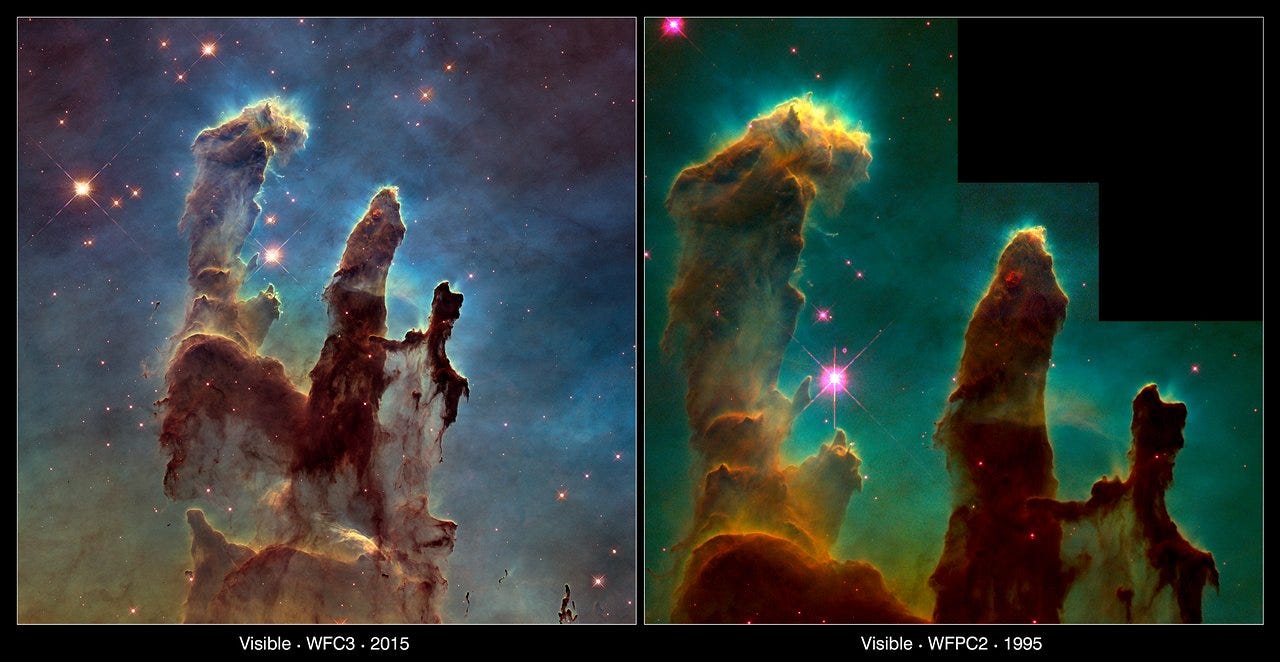
Having lived both with dogs and with cats, I find myself unable to resolve this problem: If, upon a rainy day, I open the door for a cat, he is unlikely to step outside, but he will walk to another door. It appears that the cat is not satisfied that just because it is raining in the front yard, it might not be sunny in the backyard, with a suitably dry ground to hunt on. I have opened as many as three doors to satisfy the inquisitive nature of a cat before he simply gave up and decided to remain comfortably indoors. But a dog is satisfied that he knows if it is raining anywhere just beyond one door, that it is raining all over. Is the dog to be commended for his knowledge, perhaps even for being smarter than the cat? Or is the cat to be rather commended because he remains inquisitive, curious enough to investigate? I say, that is a head scratcher. Of course, I do not mean to imply that the cat possesses more humility than the dog. Dogs, after all, have masters, whereas cats have a domestic staff, often rewarded as occasion may opportune with the beneficial provision of a slaughtered mouse laid at a loyal servant’s feet.

Nonetheless, as much as I do indeed credit the knowledge of the learned, including the owner of a nose that knows much beyond what I can imagine, I also must give credit to curiosity. Perhaps, before Albert Einstein came along, there had been many a perpetual sophomore who learned the wrong lesson from the advances of modern science. It has been said that a man of the late nineteenth century, or the early twentieth century, may have believed that we had reached an era in which one educated man might know all that there is to know. In those days we even knew the limits of the entire universe, and that it was all this one galaxy we call the Milky Way.
Then along came Einstein, and Hubble, and other troublemakers who reduced our egos by broadening our horizons. Suddenly the universe was larger and more complex, so that our ignorance outweighs our knowledge of it, each new discovery exponentially and ironically increasing our experience of ignorance with every new bit of knowledge, because each newly discovered fact opens new and many questions; questions we had not previously known to ask. The more we know, the more we do not know. We once knew the limits of the universe, but now we do not know those limits, and that is because with learning and discovery our ignorance has increased - well, rather, our appreciation of our ignorance. Humility is the price of knowledge.
However, I find that we, nonetheless, come across the occasional evolutionary throwback: Sometimes we come across someone for whom more knowledge means not only that we have learned more than our ancestors, but that we are inherently more intelligent. This comes across, if you have ever conversed with New Atheists (a specific breed), by the certainty with which they employ standard mantras. One such mantra is “God of the gaps.” Friedrich Nietzsche and Henry Drummond in the 1880s discussed how people rely on religion to address the unknown. Later in 1944, Dietrich Bonhoeffer warned against using "God as a stop-gap" while imprisoned during World War II. It would indeed be a fallacy to use gaps in our scientific knowledge as an argument for the existence of God. However, I am not aware of anyone using the “God of the gaps” as an argument for the existence of God. I am not saying that no one has ever engaged in that fallacy; I mean only that after living to somewhat of an advanced age, I have never heard or read any argument to the effect that, “Since we do not have the answer, it proves that there must be a God.” If ever I had heard such “reasoning” I would have immediately regarded it as not only a bad argument, but as an embarrassment. Nonetheless, it is a matter of dogmatic faith to many atheists these days, that the “God of the gaps” is not only prevalent as the number one argument for God, but is the entire reason why there is or ever has been any religion, any notion of any God or gods, ever at all. To deny the “God of the gaps” as the major fallacy of theism, described in the New Atheist Creed, is heresy to the truly devout members of their cult.
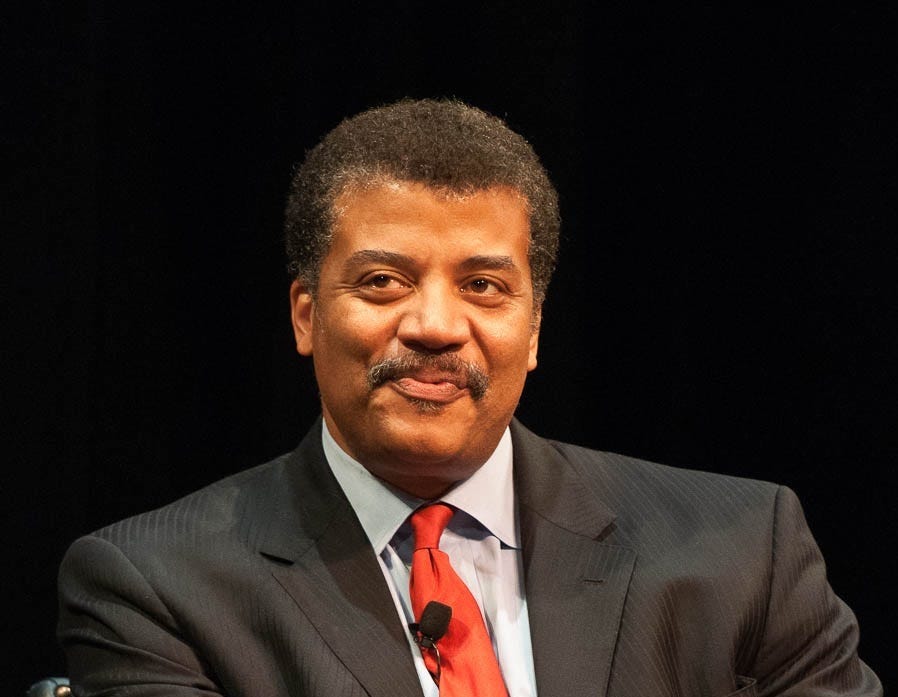
So, along comes celebrity scientist Neil deGrasse Tyson to declare Ex cathedra that “God is an ever-receding pocket of scientific ignorance that’s getting smaller and smaller and smaller as time moves on.” That I call the “Tyson’s Pocket Fallacy.” To be fair, Dr. Tyson is excellent in his field of Astrophysics and is also a very entertaining personality. He has said, “I’m not an atheist,” explaining that he is an agnostic who leans more toward atheism than theism. But he qualified that by saying (and I do appreciate this) that what he rejects is the behavior of people who use the label “atheist” and “who call people idiots.” The problem is that his celebrity status often entices him to comment beyond his area of expertise. For example, he has, as Carl Sagan before him, repeated many false historical narratives. Take my advice: When your source for a piece of historical knowledge is Neil deGrasse Tyson, verify before repeating; his history always needs to be fact-checked.
A categorical error all too common to atheists is to conflate the one God of monotheism with the created gods of polytheism. Christians (and other monotheists) do not believe in contingent gods, mere super-beings for whom the universe must first exist in order to provide a home, a place in which to be born. We do not believe in gods. We believe in the First and Uncaused Cause, the Creator and Sustainer of all, Wholly Other from every created nature and being. And, as far beyond our comprehension as the creation is, so much beyond our comprehension is the Creator who understands and sustains it all simply by His will.
But it is also true that other religious systems appear to have predated our monotheistic beliefs. This is further proof that “God of the gaps,” or “gods of the gaps,” does not explain the religious nature of humanity at all. From History, psychology, and anthropology, we learn something completely different. The same atheists who regard the “Tyson’s Pocket Fallacy” as gospel, love to repeat the mantra: “To explain thunder.” The problem with their whole concept is, as we have seen, that none of the gods of the known pantheons of history (Greek or Norse, etc.) was ever believed to be the Creator of all things. Their gods were contingent, as I stated above. They were all beings among beings, each with a beginning of life, with parents and a venue for existence in this Earth, even if above or below it. Even Zeus was believed to be the son of Kronos. Yes, there is evidence that even the Greek pantheon evolved from there unofficially, to Zeus as the only real god in a somewhat quiet sort of - wink, wink -manner among the elite thinkers in Aristotelian circles. Even so, the history of religions seems always to begin with polytheism, pagan systems that do not seek to account for the existence of the universe. This coincides with psychology and with anthropology; it points to a human impulse to worship something higher and greater than we mere mortals.
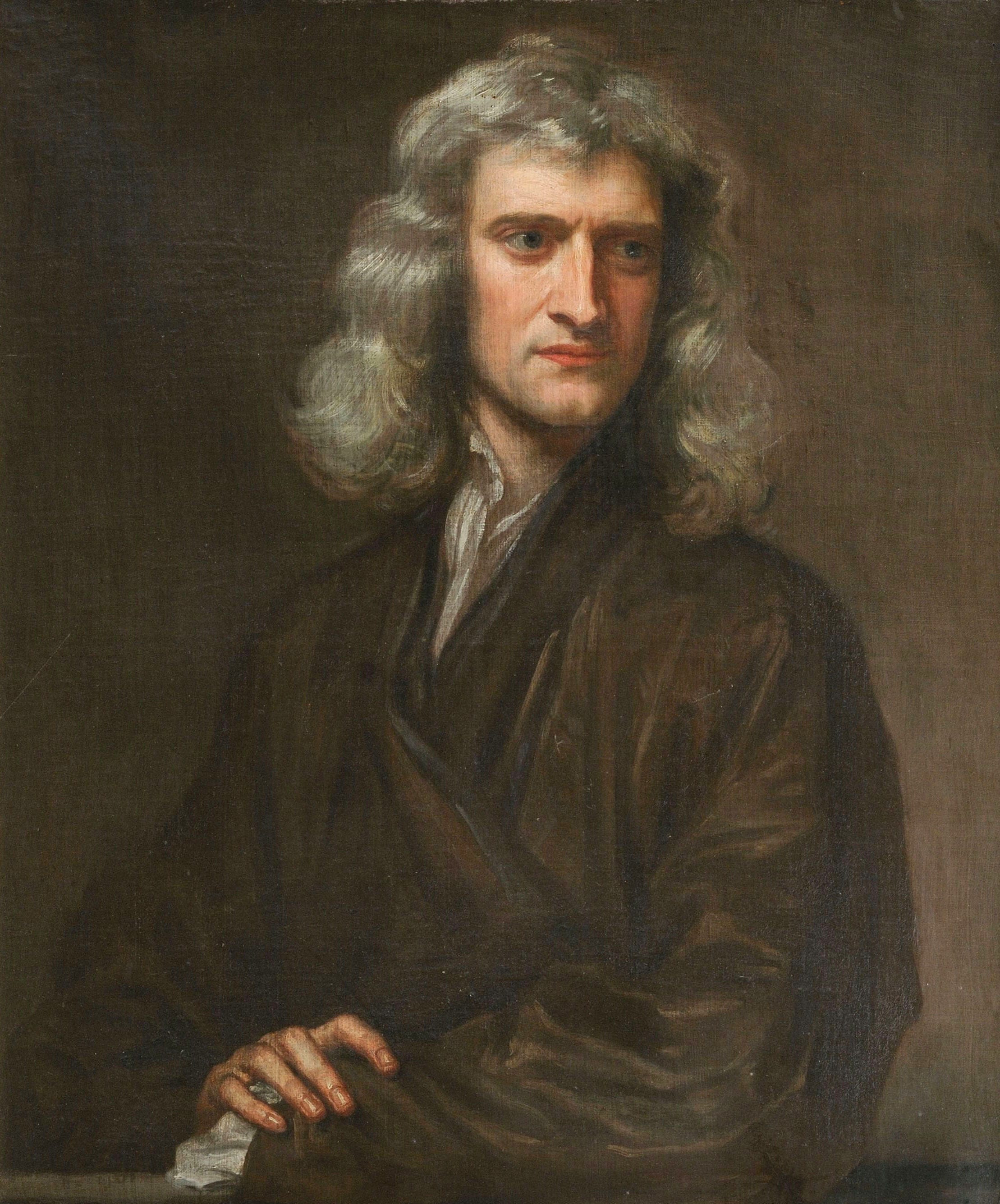
The other flaw with Tyson’s Pocket is that faith has not stifled, but rather has propelled, science. Yes, Galileo had his run-in with the pope; but not for what he wrote. Galileo was both a genius and a jerk, and what got him in trouble was his attitude in a time and place where one either rendered expected deference to the authorities or suffered the consequences. Nonetheless, even Galileo was a believing Catholic. The historical fact is that the fathers of modern science, of which Sir Isaac Newton (Tyson’s hero by the way) is the most important name, pursued knowledge because they believed that the universe, having been created by an almighty Mind, can be rationally understood. Therefore, scientific research is not only possible, but certain to yield results. That is why most of the major universities, including the ones we call “Ivy League,” have been connected to churches. For example, Newton’s work depended on the Church of England. The idea that some undefined thing called “Religion” has tried to impede science because it fights to retain “gaps” without which God has no place to reside, is not only absurd, but very much the opposite from reality.
That does not mean that we do not have the Fundamentalist problem; of course, Fundamentalism will continue to provide a source of embarrassment to the majority of believers; and without them, the average New Atheist would have no one to pick on (and no low hanging fruit to pick); but for the majority of us, advances in science can never cause God to “recede.” And here is why I say that the most appropriate response to our ever-expanding cause to appreciate our vast ignorance of God’s greatness, that is the new bits of knowledge by which we become ever more humble and ever more filled with awe and wonder, is humility and worship. Praise be ever more and more to God for the wisdom, the power, and the knowledge, He has put into creation. His infinite glory is revealed by His works. To the believer, God’s glory increases with every detail of new knowledge that we learn about His creation. To our understanding His glory does not recede; it increases.

No comments:
Post a Comment