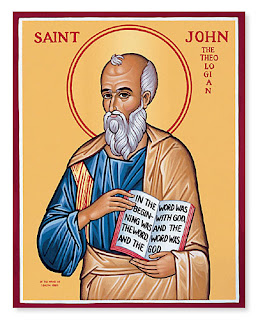
Saturday, January 12, 2008

First Sunday after Epiphany

Romans 12:1-5
Luke 2: 41-52

What brings all of these scriptures together for this day is the collect, asking for perception and knowledge of God’s will, and for the grace and power to be faithful to it. The collect reminds me very much of what St. Paul said was his prayer for the Church of the Colossian Christians:

“For this cause also, since the day we heard of it, do not cease to pray for you, and to desire that ye might be filled with the knowledge of His will in all wisdom and spiritual understanding; that ye might walk worthy of the Lord, unto all pleasing, being fruitful in every good work, and increasing in the knowledge of God; strengthened with all might according to His glorious power...” (Col. 1: 9-11)

The passages we have heard this day all speak of the mystical charism, the gift, of wisdom by which we know the will of God, and of the grace God gives us to carry it out. The wisdom that we receive is, in a very mysterious way, coming to us from the Person of Christ our Lord, mediated to us by the Holy Ghost. It is the wisdom that the world does not know, for it does not know God. By this wisdom we know God, and we know His will for us.

Now, that sounds pretty heady and possibly not even very sober. Yet it is very practical.

Before talking about the practical side however, let us look very seriously at what we see in the twelve-year old Jesus, as Luke tells the story. To begin with, He knew Who He was, and He knew the Father. For some reason contemporary commentators have imagined, since some time about the middle of the 20th Century, that Jesus suddenly became aware of His identity when He was baptized, and the heavens opened, the Spirit came upon Him, and the Father spoke. How they come up with this I cannot understand, for the manifestation of each Person of the Trinity was a revelation given to John the Baptist, and to all who stood by at the banks of the Jordan. But, nothing new was revealed that day to Jesus.

No indeed, for here we see Him quite aware of Who He is at the tender age of twelve. His wisdom is greater than that of all of the Doctors of the Law, and all they can do is marvel at Him. I have heard preachers get this all wrong too, and think that He was getting ahead of Himself, and needed to be “put in His place” by Mary and Joseph. Again, not so. This is a revelation given to us in scripture of the simple fact that this human child, this boy, was at the same time God, One with the Father. He had taken human nature, alien as every created nature is to His Divine Uncreated Person, so that He could become Man, while yet, as St Athanasius tells us, filling the heavens as the Eternal Son of the Father. He did not “empty Himself” of Divine Nature, as some bad theologians have twisted the marvelous Christological passage from Philippians chapter two to mean, but rather, as it says in Psalm 113:5:

“Who is like unto the LORD our God, that hath His dwelling so high, and yet humbleth Himself to behold the things that are in heaven and earth!”

Yes, He would go back to Nazareth and be obedient to Mary and to Joseph, for He came in the form of a servant, and was obedient, obedient even to the death of the cross. He came in humility, laying aside His glory. The self-emptying spoken of by St. Paul meant just this very thing, that while always equal to the Father, He humbled Himself and did the Father’s will.

To do the Father’s will required knowledge of that will, and it required wisdom that cannot come from human origin, especially not from fallen and sinful men. The phrase “about My Father’s business” is also translated “in My Father’s house.” In other words, “why were you looking anywhere but here? Did you not know that I must be in My Father’s house?” Both being in the temple, and then going back with them to be obedient, were all part of His journey to the cross, as He came to do the Father’s will, not His own.

I want to be very careful at this point not to fall into Palagian heresy, and teach as many moderns do, that Jesus is our example, and that if He could do it so can we; the old “pull yourself up by your bootstrap.” This is not the message. No we cannot do it, we cannot pull ourselves up by our bootstrap, and we cannot even follow His example. If we could, we would not be miserable offenders as the Prayer Book has us confess, and that the Bible certifies us indeed to be. Our first father sinned, and we are born with all three strikes already called. True religion does not teach that life is a test. It teaches that life is a shipwreck. We need a Saviour, and no one less than God will do, while also our Saviour must be a Man like us to pull us out of the curse of sin and death. No. That Jesus did it perfectly does not mean that we can do the same. It means, in fact, that we cannot. For though fully Man from the nature of His Virgin Mother, He never ceased to be God, eternally begotten of the Father. This is the Gospel: That God himself came to save us.

So then, am I saying to give up and live in sin? Admit defeat and then “eat, drink and be merry, for tomorrow we shall die?” As St. Paul answered this question, God forbid. Well, here is the punch line to all that I just said, and it was written by St. Athanasius: “God became man that man might become Divine.” In case that sounds scarey, St Peter said the same in his Second Epistle, by God’s promises “...that ye might be partakers of the Divine Nature, having escaped the corruption that is in the world through lust (II Pet. 1: 4).” The doctrine of Deification, which is the Catholic doctrine common to the Church Universal, is not that people can be gods in a any literal sense; but, rather, that because God has become human, He gives grace for us to be adopted as children of God. The destiny of those who know God is to be transformed, and to be glorified, to be given true life and immortality. As C. S. Lewis put it, to be changed into a creature so glorious, that if you were to behold such a one now, you would be tempted to fall down and worship.

But, all of this is grace, that is, a gift. It is given because we are in Christ, and He is the True Son of the Father. “Beloved, now are we the sons of God, and it doth not yet appear what we shall be; but we know that, when He shall appear, we shall be like Him; for we shall see Him as He is (I John 3: 2).” Because He has come into the world, and taken our nature, and taken our death which He did not deserve, and has passed through death into life, we can live. And the life we are given is not of this world, but is the life of Christ Who is One with the Father and the Holy Ghost. This is the change we are given, and our partaking of the Divine Nature.

Now are we the sons of God. So then, how shall we live? We have not the power to live like sons of God within ourselves, or by our own effort. What we have is the Holy Ghost Who is given to us, Who abides in us. Now, what is the practical side which I have promised to speak about? Indeed, I seem to have gotten as far away from practicality as possible- or have I? Is it not practical to learn to depend upon God, upon His Spirit Who abides with us? How? By what steps?

By the steps given to us in the Epistle of St. Paul to the Romans just as we have heard it this day. In light of God’s mercies, we must know that we no longer belong to ourselves, but to the One Who paid for us by His very life-blood, the pouring out of His soul upon the cross of death. In light of that unspeakable mercy, we give ourselves as living sacrifices to God. No, we will not be perfect. Anyone who has had a heady conversion experience, no matter how mystical and indeed real, soon learns that he is still a sinner. No, we cannot be perfect, but we can humble ourselves and practice obedience. That is what a living sacrifice does: He carries his own cross daily and follows the Son of Man. Jesus did not carry the cross only on that one Friday, but every day; for He lived always to do the will of the Father Who sent Him. Unlike Him, we will not be perfect, we will not be a sinless sacrifice. All we can do is practice obedience, however imperfectly we practice it. But, the sins of a living sacrifice are those which he discovers within himself; that is, they are not done willfully and deliberately. If we choose to do wrong, we are not living sacrifices- something to consider before saying “amen” to the Eucharistic prayer in which “we offer our selves, our souls and bodies...”

This offering of ourselves to God is our “reasonable service.” In the original Greek it is our logika latre’ia (λογικv λατρεία). Literally, our “logical liturgy.” That is, a liturgy, a service, and one that is logical, reasonable, quite in keeping with wisdom. The Liturgy we offer to God this day must be in the proper sense a very real collect of our lives; for the whole life of each one of us should be itself a liturgy, with every part having its place as an offering of worship to God. Is all that we do done to the glory of God? In the last chapter of Zechariah, we see that even the washing bowls will be inscribed with the words “Holiness unto the LORD.”

Lastly, this means that our minds must be renewed, so that we are not conformed to this world. “He was in the world, and the world was made by Him, and the world knew Him not.” Remember this definition of how the expression “the world” is often used in the New Testament. It does not know Christ, and so to it we must not conform. Christians are supposed to be non-conformists. The renewing of our minds transforms us so that we are able to do His will. This is practical. If we are too lazy to employ our minds, to read, mark, learn and inwardly digest the scriptures in light of the teaching of the Church, we will not be thinking of doing God’s will.

And, I would suggest that God’s will, for most of us, is not a mystery veiled in thick darkness. Rather, faced with the realities of life, if we are thinking about what it means to live a life that is offered to God, and are thus renewing our minds by His word, the way to do His will should be clear to us. Sometimes it will require effort to recognize that each moment of life has its own calling and purpose; other times a path opens before us that we must choose, not because it is easy, or because it is a way to find what we imagine to be happiness. No. It will be because it is the way that we know, in light of our Christian minds and our consciences, to be the way that is right.

It is not for us to choose the times in which we live, but, as Gandalf said to Frodo: “All we can do is decide what to do with the time that is given to us.” It may be quite hard for us to see the time and place in which we find ourselves as the place of God’s call upon us; and yet, often it is that when life is most ordinary and even mundane, we are faced with those choices, opportunities and even inconveniences that are, in fact, the time and place to know and do the will of the Father.

What we can do is possible not because of our cleverness in knowing His will, but because we are in Christ, and given His wisdom. The same wisdom of the twelve-year old Boy Who knew Who He was, where He belonged, and what was the will of His Father.

Now unto God the Father, God the Son and God the Holy Ghost be ascribed, as is most justly due, all might, majesty, dominion, power and glory, now and forever. Amen.

Schori: "You can't quit! I fire you!"

The official TEC Tass-style propaganda organ, namely Episcopal Life Online News, has reported the following:

"[Episcopal News Service] Presiding Bishop Katharine Jefferts Schori on January 11 inhibited Diocese of San Joaquin Bishop John-David Schofield.

"In the text of the inhibition, Jefferts Schori wrote: "I hereby inhibit the said Bishop Schofield and order that from and after 5:00 p.m. PST, Friday, January 11, 2008, he cease from exercising the gifts of ordination in the ordained ministry of this Church; and pursuant to Canon IV.15 I order him from and after that time to cease all 'episcopal, ministerial, and canonical acts, except as relate to the administration of the temporal affairs of the Diocese of San Joaquin,' until this Inhibition is terminated pursuant to Canon IV.9(2) or superseded by decision of the House of Bishops."

So, she is saying, "You can't quit! I fire you!" She is also saying that the majority vote of the people in San Joaquin means nothing. Her "church" is a dictatorship. The threat of lawsuits has been repeated, once again showing the TEC disdain for the Windsor Report and the
communiqué from Dar es Salaam, Tanzania. I am sure that the new Southern Cone diocese of San Joaquin, and their bishop, have no plans to treat Ms. Schori as if she has any authority over them.

The writer of the article did not ask for any response from the Diocese of San Joaquin, nor from the Province of the Southern Cone. Even the appearance of objectivity does not matter to the official party paper.

Friday, January 11, 2008

Deaconesses

Michael sent this as a comment on the San Joaquin thread, but I decided not to publish it as such. I think it is worthy of a separate thread. I know for a fact that the Anglican Catholic Church has lay deaconesses, but know nothing of the ministry as such. Perhaps, as a starter, someone there could brief us on just how that ministry is perceived and practiced. At the same time, it would be interesting to know if the ACC, or any of the other continuing jurisdictions, provide for permanent deacons.

I believe that it's time for the traditional Anglican movement to undertake a comprehensive historical and theological study on the diaconate, the order of deaconesses, and the role of laity in the liturgy.

The goal of such a study should be to develop a policy on the ministry of women that is at once wholely orthodox and catholic, and also designed to utilize the gifts and callings of women in the fullest and most effective way within that orthodox context.

It should seek to develop a theology of diaconal service, explain the differences between deacons and deaconesses, and also outline various proposals for how deaconesses can minister within the Anglican context. The work of other orders for women (both traditional monastic orders and contemporary "secular" orders) should also be considered.

The end result of this should be to preserve, completely and without fault, the orthodox character of the church, but also to provide maximum support, without reservation, to those women called by God to various ministries within the church. This should include programs for theological education and credentialing, with the understanding that although ordination to Holy Orders is a unique type of vocation that is male in character, the Church badly needs the vocations of women.

Wednesday, January 09, 2008

Women's "Ordination" a major factor in San Joaquin and Ft. Worth votes

Please, let us not be snobs. We turn our attention to a few points about current events in the Episcopal Church and the Anglican Communion-those other Anglicans out there.

Earlier I reported how out of touch one blogger has proven to be in his declaration that women's "ordination" is a dead issue, and that "nobody cares" about it-to clean up the unacceptable language of Greg Griffith at Stand Firm. I know that a whole army of "conservative Episcopalians" believes that the realignment of one TEC diocese into the Province of the Southern Cone, and the move to do the same in Ft. Worth, is all about the TEC rejection of the Windsor Report, that is, all about the homosexual thing. In Pittsburgh, that is mostly true (though a deeper conviction about more than just one issue is involved there as well).

In the diocese of Quincy (which has delayed its first vote until their Diocesan Convention in 2008), where the leader of Forward in Faith North America (FiFNA), Bishop Keith Ackerman is the Ordinary, in the Diocese of Ft. Worth, and in the already (as of December 8th) realigned Diocese of San Joaquin, the foremost consideration that got the realignment ball rolling was their commitment to the principles of FiF, that is, to the all male priesthood of the Catholic Tradition as a theological belief, a conviction and matter of conscience. Because the rules of the Episcopal Church would make it impossible for any orthodox successor of these current bishops to be consecrated by the bishops of the Episcopal Church, it was necessary to leave TEC and seek realignment, in the words of Jack Iker, "with a Province that does not ordain women to the priesthood, or receive women priests." By "orthodox," Bishop Iker meant, specifically, someone who shares the theological conviction of FiF that only men can be ordained to the priesthood.

I will include more details about this and many other things in the upcoming issue of The Christian Challenge.

As much as it may grieve some of the people who think that only their one issue, the homosexual issue, has been driving realignment, the facts show that an orthodox understanding of the priesthood (and let us pray that a better understanding across the board of the Diaconate is forthcoming) was first and foremost in Quincy, Ft. Worth and San Joaquin, each of them committed to the principles we of the Continuum share with Forward in Faith. For now, anyone who chooses to doubt what I have written here can listen to the speech given by Bishop Jack Iker back in October, in England. I posted a link at the time in a piece called, "To Whom it May Concern."

Sorry G.G. You are simply out of touch. Women's "ordination" does matter to quite a lot of people, and right in your backyard where you fail to look.

Sunday, January 06, 2008

The Henry you say

My mother-in-law, a Roman Catholic, was at it again. Just before Christmas, I was informed that the Church of England was started by Henry VIII because he wanted a divorce, and that the reason that the Episcopal Church has its homosexual problem is all due to married clergy. Thank God for monogamy, because one mother-in-law is quite enough. The saddest man in the Bible had to have been King Solomon with about a thousand of them to deal with. It should have been enough to put a king off of sex, since each bride probably had a mother. But, enough about my mother-in-law; we have enough Anglicans to worry about who believe this same stuff.

The second point is easy to answer, since the Orthodox have had married clergy for two thousand years, and their married clergy can beat up Rome's celibate clergy any day of the week (they might just prove this at the Church of the Nativity next Boxing Day). Try to find just one child molester or Vickie Gene imitator among those bearded fathers of the EOC. They did find one-once- and they threw him overboard immediately; they even burned his vestments as defiled. My mother-in-law should not be expected to know that Rome's all celibate clergy rule, not married clergy, is the experiment (and a failed experiment it is too). But, Anglicans should know it. No, the Henry thing is what takes more time to answer.

The ancient Celtic British Christians and the Anglo-Saxon Christians unified into one Ecclesia Anglicana (Church of England) at the Council of Hertford in 673 AD. Many centuries later Henry VIII did his thing, and it died shortly after his son did. Then Queen Mary (after whom a mixed drink is named) lit up England by burning Protestants at the stake, executing so many people in her brief reign that it took her sister, Queen Elisabeth, fifty years just to catch up on the executions, showing that sibling rivalry takes patience and perseverance. It is this second sister that must take center stage.

My mother-in-law is a hopeless case when it comes to setting the record straight, because her warped version of history was taught to her as if it was religious dogma (which I suspect it was). Bloody Mary has been removed from the picture Orwell style, the same way Bobby Kennedy never shows up in the films or photographs from his time as Joe McCarthy's right hand man. But, for Anglicans themselves, it is time to set the record straight once and for all.

The king of Spain saw England as a blossoming rival empire, and so he gave in to his rage about the fate of Queen Catherine of Aragon, the little Spanish lady who got ditched by King Henry for the sexy Anne Boleyn with her green sleeves and six fingers on each hand (Henry must have been turned on by strange things- twelve fingers in all- wow!). Using the unhappy treatment of Catherine as an excuse, or else as a reason many years after the fact, the unhappy Hapsborg brought all his pressure to bear on the pope, insisting that the Church stand up to the English for letting the daughter of six fingered Annie reign after Mary died. The pope issued a decree that the Faithful in England were to rise up, start a civil war, and murder their monarch. It was their Christian duty, damn it, to weaken their own kingdom so that the king of Spain could sail over and conquer them in the chaos. As a result, when the people of England rebelled against this, their Christian duty to take up the sword against friends and neighbors, and to destroy themselves in the process, that the pope excommunicated the Church of England. For a whole generation it was treason to be loyal to the pope- it really was treason too. Think about it.

And that, ladies and gentlemen, boys and girls, dogs and cats, Jews and Greeks, is how Anglicanism was born.

Now, if you need a little more to think about, just remember that God sunk the Armada, and that shows whose side HE was on.

Put that in your thurible and smoke it.

Κυριε Ελεησον - The Ηealing of Ελαιολαδο

I was wandering this morning through the Wikipedia article on the Jesus Prayer, and found a piece written by Metropolitan Anthony Bloom, in which I learned something that I had never known.

Eleison (ελεησον) is of the same root as elaion (ελαιον), which means olive tree and the oil from it.

Here is what he has to say about our plea for mercy:

These words 'have mercy' are used in all the Christian Churches and, in Orthodoxy, they are the response of the people to all the petitions suggested by the priest. Our modern translation 'have mercy' is a limited and insufficient one. The Greek word which we find in the gospel and in the early liturgies is eleison. Eleison is of the same root as elaion, which means olive tree and the oil from it. If we look up the Old and New Testament in search of the passages connected with this basic idea, we will find it described in a variety of parables and events which allow us to form a complete idea of the meaning of the word. We find the image of the olive tree in Genesis. After the flood Noah sends birds, one after the other, to find out whether there is any dry land or not, and one of them, a dove - and it is significant that it is a dove - brings back a small twig of olive. This twig conveys to Noah and to all with him in the ark the news that the wrath of God has ceased, that God is now offering man a fresh opportunity. All those who are in the ark will be able to settle again on firm ground and make an attempt to live, and never more perhaps, if they can help it, undergo the wrath of God.

In the New Testament, in the parable of the good Samaritan, olive oil is poured to soothe and to heal. In the anointing of kings and priests in the Old Testament, it is again oil that is poured on the head as an image of the grace of God that comes down and flows on them (Ps 133:2) giving them new power to fulfil what is beyond human capabilities. The king is to stand on the threshold, between the will of men and the will of God, and he is called to lead his people to the fulfilment of God's will; the priest also stands on that threshold, to proclaim the will of God and to do even more: to act for God, to pronounce God's decrees and to apply God's decision.

The oil speaks first of all of the end of the wrath of God, of the peace which God offers to the people who have offended against him; further it speaks of God healing us in order that we should be able to live and become what we are called to be; and as he knows that we are not capable with our own strength of fulfilling either his will or the laws of our own created nature, he pours his grace abundantly on us (Rom 5:20). He gives us power to do what we could not otherwise do.

The words milost and pomiluy (помилѹй) in Slavonic have the same root as those which express tenderness, endearing, and when we use the words eleison, 'have mercy on us', pomiluy, we are not just asking God to save us from His wrath - we are asking for love.

Saturday, January 05, 2008

Folding Chairs at the Crucifixion

Ah, if only the Romans had thought of setting up folding chairs around the cross so that people could comfortably watch the Crucifixion and not have to get their knees dusty or scratched on the rocky ground.

A bit of spiritually poisoning sarcasm by way of delayed reaction to the midnight Christmas mass I attended at the Canterbury Club parish where I served as a Reader for nearly four years.

I just made this comment in a posting over at anglican@stsams.org, a discussion list to which I have belonged for more than a decade.

I am the only member of the Anglican Catholic Church in Cyprus, so there was no ACC midnight or any other Christmas mass for me to attend. I debated for awhile attending the RCC service, but couldn't face the informality of it all. I would have gone to an Orthodox service, even though I would have been prohibited from receiving the Sacrament, but couldn't face getting up at 4 in the morning for the 5-8 am service. So I broke down and went back to St Paul's. At least the music will be edifying, I thought. Sadly, the regular organist was away, and the substitute, while minimally competent, was no source of joy.

After sitting through a very literary, highly intellectual "insiders" sermon from the new bishop (attired in a red cope!), which couldn't have been less appropriate for a congregation full of "Christmas Christians" and first-timers, the Liturgy of the Mass eventually got underway. The sermon was only one of many things that had already put me off, but by the time of the Prayer of Humble Access, I could take no more and walked out. The final straw was during the consecration, when I saw in the choir pews, just outside the altar rail, lay members of the parish staff sitting there with service booklet in hand, calmly reading along as if following the libretto at the opera.


It breaks my heart, but I think I am going to have to learn to go to bed earlier so that I can get up at four o'clock in the morning.

Thursday, January 03, 2008

ANGLICANISM to put a definition simply.

From the late Fr. Tarsitano

This an excerpt from the book written by a man I regarded as my friend, and whom I looked up to as a teacher for both his wisdom and learning. What follows is from the introduction to
An Outline of an Anglican Life by Rev. Dr. Louis Tarsitano. He was a priest, and also served as an Associate Editor of Touchstone, A Journal of Mere Christianity. At one time Lou+ was the only true Anglican via media priest in the whole CC with any public profile.
-Fr. Hart

My historical and theological method in these pages has been based on this belief: that the Anglican Church is a living example of the Scriptural Church. Anglicanism is not a pastiche of private or borrowed customs. Our Faith is not a compromise among religious traditions. Our Faith is the effort of the members of this branch of Jesus Christ's Church, by the power of the Holy Ghost, to walk the path mapped-out in the Holy Scriptures that leads through and around the obstacles of life to mankind's full communion with God in his Christ. This is the original and only true meaning of the Anglican via media. The "middle way" is not "the middle of the road"; it is the one sure highway our King has provided for our salvation, for the pilgrimage that all must make who would come to him


The Anglican Church does not "own" the Middle Way to Christ; but we maintain it for his honor and for the sake of salvation. We are a mission, not only to the world, but to the rest of the Church: not that all men should imitate us and be ours, but that all mankind should imitate Christ and be his. We can take no pride in this, since all we offer, all we stand for, is the catholic Faith of the Bible, the Apostles, and the Undivided Church, and the evangelical zeal of the Great Commission to teach all nations. These are God's gifts, and not our own.

I certainly have no right to speak for the rest of Anglicanism, nor do I intend or claim to. What follows is simply one Anglican priest's understanding of the outline of our Anglican heritage. I have included a number of Biblical warrants and backgrounds for our teaching and practice, in the hope that "our own" will understand the Scriptural basis of what we do and believe, and that the "stranger" who may read these pages, however devoted to his own branch of Christ's Church, will recognize us as his brothers and sisters in Jesus Christ. Then, there will be no strangers.

Tuesday, January 01, 2008

Swim the Tiber without me

I would like to address some of my dear Anglo-Catholic brethren. Not so much the learned ones who appreciate their Anglican heritage, but the effeminate fussy ones whose inferiority complex toward the Italian Mission (i.e. the Roman Catholic Church) is quite inexplicable. Don't misunderstand. Roman Catholicism is not the enemy; it is a valid way of being Catholic, better than Protestantism in terms of the sacraments, but defective compared to your own heritage. At the end of the day, if you cannot see the truth of your Anglican heritage, I pity you.

Therefore, I am nailing to the door a few theses of my own.

1. An Anglican is fully Catholic by the standards of the Scriptures and the Patristic period.
2. Our orders have been preserved without defect, with all of the charisms and power Christ has granted through his apostles to his Church.
3. Our doctrine is better and more pure than that of Rome.
4. Newman was not all there, and his later criticism of Anglicanism is neither accurate nor wholly rational.
5. Newman's theory of Doctrinal Development is as dangerous as the Pentecostalist notion of "Progressive revelation."
6. The Pope is not infallible.
7. The Pope does not have Universal Jurisdiction.
8. The Pope is the bishop of Peter's See, but so is the Patriarch of Antioch.
9. The service of Holy Communion is a perfectly valid Mass or Eucharist.
10. Our Anglican fathers were not Calvinists or Lutherans.
11. "Protestant" is not the opposite of "Catholic."
12. Some Catholics are Protestant Catholics.
13. We do not need doctrines like "the merits of the saints" or a concept of Purgatory as "temporal punishment."
14. When the Articles say that "The Romish doctrine of Purgatory is a fond thing," this does not mean that we are supposed to be fond of it.
15. At the end of the day, if it is not in the Bible, it REALLY cannot be necessary for salvation.
16. Point 15 is classic Catholic teaching.
17. You should not care what the Roman See thinks of your status as a true church.

So, if you must swim the Tiber, do it quickly. Otherwise, learn to appreciate the wisdom of the Anglican Way.

Happy New Year

My very warmest wishes to each and every one of you as we begin a new year in our lives and on this blog.

Thanks to the ever-growing number of readers and to the loyalty of older ones, traffic on The Continuum came close to tripling in 2007 -- from 28,835 visits in 2006 to 75,360.

Of course, there was also a substantial increase -- to 361 from 268 -- in the number of posts, which gave readers a lot more substance.

I can take very little credit for this personally, especially during the past six months, as I have been struggling with trying to sort out my own life. It is to Father Robert Hart that we all owe a vote of gratitude for keeping things rolling.

My prayer for each of you in this new year is that you will continue to grow in faith, in hope and in charity.

Monday, December 31, 2007

Circumcision of Christ

January 1st

Romans 4:8-14
Luke 2:15-21


Back in the 1970s, when I was in my first year in college, I had a run-in with a Philosophy instructor. The older I get, the more I read and the more I learn, the more I know how right I was, and how wrong the instructor was. Now, that is not the normal reflection one makes of his first year of college, and not the normal reflection I make of my undergraduate days in the 1970s when I was a mere boy and a beardless youth (a time my own kids think could not have existed. When I tell them I was once their age, I am not sure they believe me). Anyway, this Instructor told the class that the ancient Greeks had believed that matter was evil (so far she was somewhat right), and that, in her words, “we see this as part of Christian teaching, that matter is evil.” I did not hesitate to contradict her. I spoke right up: “That is not Christian teaching,” I said. And I was right. She said to me, “Defend that statement.” So, I did. I pointed out that as early as the Book of Genesis, God looks at His creation and says, “It is very good.” I mentioned the sacraments, specifically bringing up baptism and the Lord’s Supper, which use matter for what is holy. I was about to point out the most important part, that Christians believe that God Himself has appeared in the world of matter in what we call the Incarnation, the Christian teaching that God the Son is fully God and fully man in one Person. But, she cut me off, and repeated her assertion that Christians have always believed that matter is evil.

Now that I am a real theologian, and a published one at that, I can add that the entire concept of matter being evil was the worst of ancient Gnostic heresies taught by one Marcion, whom the bishop and martyr Saint Polycarp called “the firstborn of Satan.” I am sure that these names were not familiar to the instructor. To this day I am irked by the fact that standards at that college were so low as to make an instructor out of someone so totally unqualified. And yet, if that unfortunate person had not been presenting herself as someone who is educated, we could have a certain amount of sympathy.

After five centuries of division and confusion among Christians, it is all too true that the heart of the message is missing from what most people think we believe. During this season of Christmas, and particularly this eighth day of Christmas, the Feast of the Circumcision of Christ, it is a good time to state some basics about our faith. In particular, what does it mean that God the Son was born into the world as a human being? And, what does it mean about the use of matter in sacraments and in worship in general? It is right that we can see water, incense, the sound of bells and other created things as useful in worship. Our God made a good world, and created things have been sanctified by Christ taking human nature and coming into the world of matter, of space and of time. Eternity and time have met in one Person. For people who object to water, to incense, to bells and to the Real Presence in the Sacrament, I can only ask what they have against Jesus Christ having come in the flesh.

The fact that we believe such a thing, that we believe “the Word was made flesh,” is rather startling, quite a shock when we really take it in for the first time. I recall vividly when I was very young, attending a Midnight Mass on Christmas Eve, and the Rector of Saint Mark’s Episcopal Church, a small country church in Maryland, read the opening of the Gospel of Saint John, the appointed Gospel for Christmas. I knew the words already, but as they were read in the context of the Church in that holy service, on that holy night, they hit me like a bolt of lightening. “…the Word was God…And the Word was made flesh and dwelt among us.” A few days later I was walking the family dog, and those words came again. I already believed that Jesus Christ is fully God and fully man; but the idea of what that means, once again, was like being struck by lightening. It really is rather a shock, a good shock and happy, to grasp the fact that God the Son has condescended to take our very nature into His eternal and uncreated Person- God equal to the Father and the Holy Ghost.

The very fact that Saint Luke tells us that he was circumcised takes on great significance. Every Jewish boy was circumcised on the eighth day. This is what God commanded Abraham, and what Moses simply continued. But, what does it mean that Jesus Christ was circumcised? What does it tell us about creation and redemption, and God’s love for the human race?

Well, to begin with, as our Collect points out, Jesus Christ would fulfill the Law. For redemption, it reminds us of words from the Epistle to the Hebrews: “For we have not an high priest which cannot be touched with the feeling of our infirmities; but was in all points tempted like as we are, yet without sin (Heb. 4:15).” The fact that He fulfilled the Law perfectly, and was Himself without sin is essential to our salvation; the Righteous One being sacrificed as a Lamb without spot, himself pure from all sin, “Who his own self bare our sins in his own body on the tree, that we, being dead to sins, should live unto righteousness: by whose stripes ye were healed (I Pet. 2: 24).” As Isaiah put it, in the 53rd chapter:

“Surely he hath borne our griefs, and carried our sorrows: yet we did esteem him stricken, smitten of God, and afflicted. But he was wounded for our transgressions, he was bruised for our iniquities: the chastisement of our peace was upon him; and with his stripes we are healed. All we like sheep have gone astray; we have turned every one to his own way; and the LORD hath laid on him the iniquity of us all.”

The sinless One, like Adam whose sin made the many guilty, has by His obedience unto death as the atoning sacrifice, made the many righteous. In this first shedding of blood by circumcision He begins to obey and to fulfill the whole Law; no one else ever did it perfectly. No one else could. No man in heaven or earth was worthy to open the scroll, says the Book of Revelation, except for the One who was like a Lamb that had been slain, and is called the Lion of the Tribe of Judah.

What else does His circumcision tells us? It tells us that we can identify Him as an individual in history. This is very important, indeed essential, to believing that His Incarnation was real and not allegorical. Back in the 1980s, in New York City, one of the “progressive” Episcopal churches in town decided to display a female corpus- that is, the body of a woman- on a crucifix. One of the great errors of our time is the kind of feminism that wants something other than simply equal respect for both men and women, which is a good thing in itself. But this is, instead, that other kind of feminism, the Satanic kind that hates human nature as God created it, and meant it to be. It is the kind that hates life, that makes the sin of abortion, which is the murder of the unborn, into its only “sacrament.” Like the witch in Narnia, it makes it always Winter but never Christmas. A female corpus on the crucifix gets to the heart of error. Jesus Christ, in His sacrifice is transformed into a mere symbol. How backwards from reality.

God is the greatest Reality of all, and we human beings are the image. Jesus Christ in His human nature is the exact image, the express icon of the Father. His Circumcision reminds us of this reality: namely, that He entered real human history. That is, the world, as it really is, received into its created existence the Lord Himself. He was real, and as an individual had marks that made him of the male sex and of Jewish ethnicity, just as we all have these same distinctions of belonging to one of the two sexes, and to our own specific lineage from our ancestors. His sex was male, his ethnicity was Jewish.

It is important that He was male. This is no “accident” of the Incarnation, but rather, part of the plan. It is important that he was Jewish, descended from the Royal line of David. This too was no mere “accident” of the Incarnation, but an essential part of the plan of His Incarnation. Only a man could be our High Priest and represent all of humanity in One Person- as head. Only a Jew from the line of David could be the eternal King whose government and peace will have no end. 1

And, all of this ties into that other fact of His Circumcision, his Name. “And when eight days were accomplished for the circumcising of the child, his name was called JESUS, which was so named of the angel before he was conceived in the womb.” Jesus, Y’Shua, is a Hebrew name that means Salvation. As it says in the book of Isaiah:

Ci’ Adonai Shof’tenu

Adonai Mak’ka’kenu

Adonai Malkenu

Hu Yashi-enu

“For the LORD is our judge, the LORD is our lawgiver, the LORD is our king; He is our salvation (Isaiah 33:22).”

My upcoming book goes into detail about the two comings of Jesus Christ as they are revealed in the Old Testament: His first coming as Priest and His second when He will come as King. For today, let us consider the meaning of His circumcision, the first shedding of His blood, and His particular history as a male of the house of David, of the tribe of Judah. This real man in real history has overcome the barriers between us and God. By taking human nature He has overcome the chasm between Creator and creature that separated us from God. As the Lamb of God Who took away the sins of the world in his atoning death, when he offered himself on the cross as the full, perfect and sufficient sacrifice, oblation and satisfaction for the sins of the whole world, he removed the separation between us as sinners and the Holy God. When He rose from the dead He did away with death that separated us from the Living God, the source and author of all life.

His Name is Jesus. He is our salvation.

____________________________
1. See Isaiah 9:6,7. These two verses reveal the male sex and Davidic family descent of the Messiah as absolutely necessary.

Saturday, December 29, 2007

Solemnity of the Humble Shepherds

In 2003 I had reason to preach based on the propers used by the Polish National Catholic Church, in which the first Sunday after Christmas bears the name placed above as the title.

Luke 2: 15-20

And it came to pass, as the angels were gone away from them into heaven, the shepherds said one to another, Let us now go even unto Bethlehem, and see this thing which is come to pass, which the Lord hath made known unto us. And they came with haste, and found Mary, and Joseph, and the babe lying in a manger. And when they had seen it, they made known abroad the saying which was told them concerning this child. And all they that heard it wondered at those things which were told them by the shepherds. But Mary kept all these things, and pondered them in her heart. And the shepherds returned, glorifying and praising God for all the things that they had heard and seen, as it was told unto them.


Saint Luke was a physician, and his writings make him the Charles Dickens of the New Testament. By that I mean that he always takes into account human frailty, and our need for healing. His writings have been very important in the history of the Western world, in helping to create the conscience of civilized man, in forming the recognition that compassion is a necessary ingredient for any people. I cannot help but wonder if our world would have developed the medicines and built the hospitals which have prolonged countless lives and relieved much suffering, if not for the message which has been gleaned from his two books. I do not want to take away anything from the other saints who wrote the scriptures, such as Saint Paul who taught us more about charity- the love of God- in one chapter than even a mind like that of Plato could have written in thousands of chapters in numerous books; or from Saint John, who first tells us of the mysteries of love within the Trinity, and extended to mankind. I simply want to speak of my appreciation for Saint Luke who saw the need of man to be healed, first and foremost by repentance from sin.

And, in the early chapters of his Gospel we see a glimpse through the eyes of Doctor Luke into the value of humility that was a part of Christ’s coming and His message to a lost world. Back in the sixties it was popular and trendy, as well as dishonest and silly, to picture Christ as a "revolutionary.” The very context of the times made the use of that word, "revolutionary," part of a grand deception against order and hierarchy, both natural and spiritual, which is needed to sustain human life and love of truth. But, Christ did bring about a kind of genuine revolution; His was the revolution of humility which overturns the overwhelming structure of power and domination, oppression and distinction of class. In Luke’s Gospel we read of the great and powerful figures of the empire by name and office, the name of Caesar Augustus and his governors, but mentioned briefly as nothing more than markings of time. And the time they mark is important not because of their power, but because of what God was doing for mankind through humble persons, insignificant as the world counts significance, poor members of a conquered people without wealth or power, suffering their own kind of oppression from a foreign ruler who taxed and commanded without "consent of the governed." So, yes, Augustus was the emperor, and Cyrenius was the governor, and so forth; but the action of the story, what matters, is what takes place in a stable with a poor carpenter and his wife, with poor shepherds, and with that most helpless of human creatures, a newborn babe.

The angels did not appear to the emperor, or to the governor. They did not appear to the priests in the temple, compromised as they were by their dealings with Caesar’s henchmen. They did not appear to the Pharisees who loved to be greeted in the marketplace and given the position of honor. They appeared to the shepherds, men whose vocation had become despised by the religious authorities of their day; men who were not regarded as members of the synagogues because their work kept them busy in the fields when others could gather for prayer. By the standards of that time these were men who were deemed to be irreligious for reasons beyond their own control. They could not ignore the sheep on every Sabbath, or every Holy Day; their livelihood kept them outdoors with dirty stupid animals who could not be abandoned for even an hour. But, it was to them that the angels appeared; it was to them that the Gospel was preached from heaven itself. And they were the first to come to Bethlehem and adore Christ the Lord.

Now that is genuinely revolutionary, standing the honors of the fallen world upon their head.

And where did they go to worship this king? Did they go to a fine palace adorned with every luxury? They that wear fine apparel are in king’s houses; but the babe wrapped in swaddling clothes was lying in a manger. His mattress was straw, surrounded by the aroma of animals - ox and donkey. As Saint Paul tells us, "For ye know the grace of our Lord Jesus Christ, that, though he was rich, yet for your sakes he became poor, that ye through his poverty might be rich ( II Cor. 8: 9)."

And again,

" Let this mind be in you, which was also in Christ Jesus: Who, being in the form of God, thought it not robbery to be equal with God: But made himself of no reputation, and took upon him the form of a servant, and was made in the likeness of men: And being found in fashion as a man, he humbled himself, and became obedient unto death, even the death of the cross. Wherefore God also hath highly exalted him, and given him a name which is above every name: That at the name of Jesus every knee should bow, of things in heaven, and things in earth, and things under the earth; And that every tongue should confess that Jesus Christ is Lord, to the glory of God the Father (Phil. 2: 5-11)."

Now that is a true revolution, without committing violence, though suffering the violence of sinful men, conquering the conqueror by humility. The structure of the world is based upon how the Gentiles do things - ruling and climbing the ladder of power, exercising dominion upon others- "it shall not be so among you; but he that would be greatest among you must be servant of all, even as the Son of Man came not to be served, but to serve." The world cannot change this system; it is in bondage to it until Christ returns as the rightful King of all the earth, because until then sin reigns in the human heart. We have seen that the world cannot change this system of power. The modern world has seen many revolutions. What we had here in America was not a revolution, even though the American war for Independence is called a revolution. The first modern revolution was in France, and it overturned a neglectful monarchy for a reign of terror, a violent assault on everything good and decent by bloodthirsty savages, many of them in fine lace and powdered wigs. This French monstrosity was the prototype of the revolutions of the Twentieth Century, each a blood bath bringing on a new ideology and with it a new and more harsh oppression than anything suffered before it by the peoples of the various countries. The world’s idea of a revolution is simply the rule of the Gentiles replacing a previous rule of the Gentiles, exactly as our Lord described it. The ideologies of the world remain nothing more than competing parties locked into the same old system of sin and darkness which can only express it’s perverse notion of order by raw power.

The only real revolution was accomplished by the rightful King, Jesus Christ; and He did it by the most astonishing means; He did it by humility and by the cross. Choosing to be born in a stable into a poor family, a noble family descended from ancient royalty, but a humble and poor family nonetheless- so poor that at His Presentation (a feast coming up, also named the Purification), as recorded also by St. Luke, they had to offer two pigeons instead of a lamb- to be worshiped by shepherds instead of by the "significant" people of either the Temple or the Empire. And he chose to establish his kingdom by taking up the cross instead of claiming a throne. The shadow of the cross hung over the manger in which he lay as an infant. Every detail of His life on earth, from its earliest moments, speaks of the cross that He would later take up and carry by His own free will. Everything that Christ does, including the circumstances of His birth, goes against the grain; the world is locked into a system of ambitious power and dominion because its greatest law is the law of sin and death. The world’s revolutions never create freedom, peace and righteousness because it is not possible. Pride and ambition, no matter how lofty the ideology, cannot provide an escape from the gravity of sin and death. But, humility, when it is exalted to the highest place of honor by God who resists the proud, is the only true revolution. It does not bring about anarchy or a new order. It restores the rightful King to His place of ruling in the hearts of men. It brings about love and obedience to the Christ Who ruled from the cross to bring about our healing from sin and death, and Who everlives to intercede for us sinners, sinners who repent.

This choice made by God speaks loud and clear to us. He ignores the honors of the world, and calls the outcast shepherds, men who probably would never have considered themselves worthy of God’s love, or of any honor, to be the first to worship the Incarnate Christ, to be the first congregation that stands a prototype of the Church. From this we learn of our need to humble ourselves under the mighty hand of God

Friday, December 28, 2007

Non-Anglican Difficulties, Part Three

The following came from my answers in private correspondence. It struck me as I had completed it, that parts of it may be useful. The identity of the person to whom I wrote is confidential. The first answer is not to a Non-Anglican difficulty, just a modern one.

About contraception: The fathers were not silent. What they wrote condemns it as sin. I do understand your circumstances very well, because we have four (now grown) children, and at times my one and only source of family income seemed to be no better than desperate poverty. My health was not good, and I came close to death more than once. The last time that happened my wife was pregnant with number four. Someone did bring her to the hospital that night, assuming I might die before they arrived. That was, in fact, exactly nineteen years ago this very day (the feast of the Holy Innocents).

...my answer cannot help but seem superficial. But, it is not really superficial at all. It is that you allow this one matter to help you develop something in addition to faith, namely trust. Whatever God has planned for your family, it is not to destroy you or hurt you. It is not adverse to your well being.

These answer Non-Anglican difficulties:

About Anglican orders: ...The question deals with apologetics, that is, a defensive argument. Argument is not a bad word, and should normally take place between "learned friends." I repeated an outline of very basic arguments in order to inform you. This is a subject that is difficult to put into a few words in an e-mail perhaps, and so I overloaded each sentence with information. This is because I keep this information in my head. If you look at the 2006 archives of the
Continuum, you will discover a wealth of information that refutes Apostolicae Curae. I recommend as well that you read Saepius Officio (1897), which was superior in scholarship to the 1896 Papal Bull it refuted. ...the See of Rome is stuck with every document bearing Papal Imprimatur as a precedent. But, the good news is you can ...receive Communion in good conscience from an Anglican priest if you study the Anglican answers.

About the Sacrifice of the Mass: the only thing rejected by the
Church of England was the plural, "sacrifices of masses." Written in the 16th century, the relevant Article was addressing the flawed understanding of the people, not the theologians in Rome. In modern times, the Church of Rome sees that the Church of England was right to reject "the sacrifices of masses." There is only one sacrifice, and only one Mass, no matter how often it is celebrated. The Book of Common Prayer draws from the Epistle to the Hebrews and produces this line in the Canon of Consecration:

"
ALL glory be to thee, Almighty God, our heavenly Father, for that thou, of thy tender mercy, didst give thine only Son Jesus Christ to suffer death upon the Cross for our redemption; who made there (by his one oblation of himself once offered) a full, perfect, and sufficient sacrifice, oblation, and satisfaction, for the sins of the whole world."

Reading through the entire Prayer, the language of sacrifice is clearly present. It is repeated in many ways, so as to include the whole of life, to summarize everything that is offered to God. If not in the Mass, where could we summarize the whole of our lives as an offering to God, in response to His gift of His Son? This includes praise and thanksgiving. It includes the bread and wine on the altar, so that they may be for us the Body and Blood of Christ. It includes as well our bodies as living sacrifices and our reasonable service of prayer (Rom. 12:1,2).

Excerpts from the BCP, Holy Communion:

"
we, thy humble servants, do celebrate and make here before thy Divine Majesty, with these thy holy gifts, which we now offer unto thee, the memorial thy Son hath commanded us to make..."

"
And here we offer and present unto thee, O Lord, our selves, our souls and bodies, to be a reasonable, holy, and living sacrifice unto thee..."

"
And although we are unworthy, through our manifold sins, to offer unto thee any sacrifice; yet we beseech thee to accept this our bounden duty and service; not weighing our merits, but pardoning our offences, through Jesus Christ our Lord..."

That last line is not to be understood as "bounden duty and service"
instead of sacrifice; but, in the context of the Prayer, it is an expanded way of saying "sacrifice." We are not worthy to make any sacrifice, but accept this duty and service- i.e. sacrifice- through Jesus Christ who gave himself once for all.

About the Real Presence:
Lex Orandi Lex Credendi. See these words of orandi, and so be helped to understand what is actually credo for us:

"
AND we most humbly beseech thee, O merciful Father, to hear us; and, of thy almighty goodness, vouchsafe to bless and sanctify, with thy Word and Holy Spirit, these thy gifts and creatures of bread and wine; that we, receiving them according to thy Son our Saviour Jesus Christ’s holy institution, in remembrance of his death and passion, may be partakers of his most blessed Body and Blood."

"
Grant us therefore, gracious Lord, so to eat the flesh of thy dear Son Jesus Christ, and to drink his blood, that our sinful bodies may be made clean by his Body, and our souls washed through his most precious Blood, and that we may evermore dwell in him, and he in us"

"
THE Body of our Lord Jesus Christ, which was given for thee, preserve thy body and soul unto everlasting life...THE Blood of our Lord Jesus Christ, which was shed for thee, preserve thy body and soul unto everlasting life."

"
ALMIGHTY and everliving God, we most heartily thank thee, for that thou dost vouchsafe to feed us who have duly received these holy mysteries with the spiritual food of the most precious Body and Blood of thy Son our Saviour Jesus Christ."

My point is simple. Despite the theories of various writers, including some Anglicans, the actual Holy Communion service is the Catholic Mass of the Apostolic Church with no gaps in the theology it expresses. This is why the Patriarch of Alexandria wrote these words to the Archbishop of Canterbury in 1930, delivered on Christmas day:

"The Holy Synod recognizes that the declarations of the Orthodox, quoted in the Summary, were made according to the spirit of Orthodox teaching. Inasmuch as the Lambeth Conference approved the declarations of the Anglican Bishops as a genuine account [1] of the teaching and practice of the Church of England and the Churches in communion with it, it welcomes them as a notable step towards the Union of the two Churches. And since in these declarations, which were endorsed by the Lambeth Conference, complete and satisfying assurance is found as to the Apostolic Succession, as to a real reception of the Lord’s Body and blood, as to the Eucharist being thusia hilasterios [2] (Sacrifice), and as to Ordination being a Mystery, the Church of Alexandria withdraws its precautionary negative to the acceptance of the validity of Anglican Ordinations, and, adhering to the decision of the Ecumenical Patriarchate, of July 28, 1922, pronounces that if priests, ordained by Anglican Bishops, accede to Orthodoxy, they should not be re-ordained, as persons baptized by Anglicans are not rebaptized."

About the 16th century: It is true that during the days of Henry VIII iconoclasm was caused by the fanatical excesses launched by Thomas Cromwell. The people were mostly outraged by this blasphemy. Of course, later the the Church of England was reunited with the Pope. A second break with the See of Rome was caused by the Pope himself. Eager to please the king of Spain, he demanded that Elisabeth be overthrown and put to death, and that the faithful of England plunge themselves into Civil War. The new queen had not split with Rome at that time; but, she was the daughter of Ann Boleyn, and so the king of Spain wanted to use this to claim that her rule was illegal, and he wanted to conquer England. This second split was not like the the earlier one that had been caused by Henry VIII's desire to have a divorce. It was caused by a pope who aligned himself with the empire of Spain, and who made impossible demands for bloodshed, and surrender of a whole country to a foreign power. The iconoclasm of Thomas Cromwell never resurfaced except among the heretical Puritans, a group that was considered to be a threat to the Church of England from its outset (even though some people pretend that the Puritans were Anglicans).

So, I would not allow the iconoclasm that had once taken place to cast a shadow over Anglican validity.

You wrote: "
Purgatory, excessive devotion to the saints with
novenas, heavy heavy heavy emphasis on works sometimes
at the expense of faith, Mariology taken too far,
indulgences, and a lack of Biblical study have all
concerned me about Roman Catholicism."

Some of these things are simply popular expressions of devotion [which are perfectly good], and some Anglo-Catholics are identical in their practices. The only theological problem that I see in the teaching of Rome, among the items you listed, is the combination of Purgatory with indulgences. It is still taught in the (otherwise excellent) Catechism of the Catholic Church that was produced under Pope John Paul II. If Purgatory is a punishment instead of purification, and if indulgences are granted on the basis that God owes mankind credit to its account due to supererogation of the saints, what happens to this clear teaching of scripture? "Therefore as by the offence of one judgment came upon all men to condemnation; even so by the righteousness of one the free gift came upon all men unto justification of life. For as by one man's disobedience many were made sinners, so by the obedience of one shall many be made righteous (Rom. 5:19, 20)." I say, this point of official Roman Catholic teaching is incompatible with the Word of God, and refutes essential truth of the Gospel. It is, also, a point in which the new catechism is self-contradictory, because it affirms those same essential points of the Gospel earlier on, that this section denies. There's that problem of being stuck with every precedent again. They should, rather, just drop the Medieval innovation.

About Papal Infallibility: Like the above Medieval innovation, this modern innovation (1870) is not part of "the faith once delivered to the saints (Jude 3)." It is not in accord with the Vincentian Canon: "Quod ubique, quod semper, quod ab omnibus creditum est (What has been believed everywhere, always, and by all)." Conciliar authority was the rule for a thousand years, and no pope [needed to be] present at any of the seven Ecumenical Councils, having sent representatives, and having awaited the written documents to either ratify or reject (with no more or less authority than the other Patriarchs).
__________________________________________________________________

On that last question of Papal Infallibility, the subject is more complicated than most people realize. Fr. John Hunwicke, a priest in the Church of England, wrote an article that helps to clarify its meaning. You can read what he has written here.

Thursday, December 27, 2007

Feast of the Holy Innocents December 28th


The Slaughter of the innocents, TINTORETTO 1582-87

Lullay, Thou little tiny Child,
By, by, lully, lullay.
Lullay, Thou little tiny Child.
By, by, lully, lullay.


O sisters, too, how may we do,
For to preserve this day;
This poor Youngling for whom we sing,
By, by, lully, lullay.


Herod the King, in his raging,
Charged he hath this day;
His men of might, in his own sight,
All children young, to slay.

Then woe is me, poor Child, for Thee,
And ever mourn and say;
For Thy parting, nor say nor sing,
By, by, lully, lullay.


Coventry Carol -Robert Croo, 1534


The Collect.

O ALMIGHTY God, who out of the mouths of babes and sucklmgs hast ordained strength, and madest infants to glorify thee by their deaths: Mortify and kill all vices in us, and so strengthen us by thy grace, that by the innocency of our lives, and constancy of our faith even unto death, we may glorify thy holy Name; through Jesus Christ our Lord. Amen.

For the Epistle. Rev. xiv. 1.

I LOOKED, and, lo, a Lamb stood on the mount Sion, and with him an hundred forty and four thousand, having his Father's name written in their foreheads. And I heard a voice from heaven, as the voice of many waters, and as the voice of a great thunder: and I heard the voice of harpers harping with their harps: and they sung as it were a new song before the throne, and before the four beasts, and the elders: and no man could learn that song but the hundred and forty and four thousand, which were redeemed from the earth. These are they which were not defiled with women for they are virgins. These are they which follow the Lamb whithersoever he goeth. These were redeemed from among men, being the firstfruits unto God and to the Lamb. And in their mouth was found no guile: for they are without fault before the throne of God.

The Gospel. St. Matt. ii. 13.

THE angel of the Lord appeareth to Joseph in a dream, saving, Arise, and take the young child and his mother, and flee into Egypt, an be thou there until I bring thee word: for Herod will seek the young child to destroy him. When he arose, he took the young child and his mother by night, and departed into Egypt: and was there until the death of Herod: that it might be fulfilled which was spoken of the Lord by the prophet, saying, Out of Egypt have I called my son. Then Herod, when he maw that he was mocked of the wise men, was exceeding wroth, and sent forth, amid slew all the children that were in Bethlehem, and in all the coasts thereof, from two years old and under, according to time which he had diligently enquired of the wise men. Then was fulfilled that which was spoken by Jeremy the prophet, saying, In Rama was there a voice heard, lamentation, and weeping, and great mourning, Rachel weeping for her children, and would not be comforted, because they are not.

Saint John, Apostle and Evangelist December 27th


In the Orthodox Church, St. John is one of three men to have the title "Theologian" added as a special designation to his name. When we reflect on his words in his first Epistle (appointed for today) and in the opening to his Gospel, we find a strong affirmation of the Trinity and the Incarnation as the center of his message. In his case it was the clarity of revelation expressed so powerfully that marks him as what we call, in the deepest sense, the Theologian.

Several years ago, I wrote these words: "A good theologian takes his readers by the hand and leads them up the Mount of Transfiguration, where they can see the revelation of divine glory in the human face of Jesus Christ. A good theologian helps us to encounter God, because he knows God. Though his work is too objective to indulge in autobiography, his footprints are discernable in his pilgrimage to Zion and the temple." Indeed, for the average theologian (small "t") who works in academic and ecclesiastical circles, published work is quite often objective in this sense, and is not autobiographical. Not so with St. John the Apostle and Evangelist, the Theologian. For most of us, we can understand the love of God only because of the Church that teaches, and that documents its teaching with the authority of scripture. We are taught that the man who died for each of us, to restore us to God from sin and death, and who appears now as our Mediator and Advocate, the resurrected Christ, has demonstrated God's love by his life, death and life.

St. John came at the beginning of the Church, and he learned of this love in a very personal way, a way that he wants to share with the whole Church as extended fellowship with him, and the other eyewitnesses of Christ's ministry in this world, and therefore with God and with his Son. Throughout his Gospel, we learn that John referred to himself as "the disciple whom Jesus loved." The meaning of this can be reduced to a matter of some form of favoritism, or simple friendship. But, in light of the great themes of his writing, the apostle was more likely to have been letting us in on revelation that made him the Theologian. He saw in everything that Jesus taught and did that inexpressible love beyond all human imagination. He saw it as the Lord was going about teaching and healing. He saw it as the Lord washed the feet of the apostles on the night in which He was betrayed. He saw it as he stood and beheld the agonies of Christ dying on the cross, giving his life willingly. He saw it when the Lord appeared after his resurrection to extend grace and mercy. To John it was this love that opened his eyes so wide that he could write, "And the Word was made flesh, and dwelt among us."

And so, he tells each of us that God's love is so great that we can enter the fellowship of those who have heard, who have seen with their eyes, who have looked upon, and whose hands have handled the Word of life. He dwelt among us because of what was made known to this one apostle, that the Lord loved him. He could write of that love only in the great eternal and universal themes of his Gospel.

Saint John the Evangelist's Day.

The Collect.

MERCIFUL Lord, we beseech thee to cast thy bright beams of light upon thy Church, that it, being instructed* by the doctrine of thy blessed Apostle and Evangelist Saint John, may so walk in the light of thy truth, that it may at length attain to everlasting life†; through Jesus Christ our Lord. Amen.


The Epistle.
1 St. John i. 1.

THAT which was from the beginning, which we have heard, which we have seen with our eyes, which we have looked upon, and our bands have handled, of the Word of life; (for the life was manifested, and we have seen it, and bear witness, and shew unto you that eternal life, which was with the Father, and was manifested unto us;) that which we have seen and heard declare we unto you, that ye also may have fellowship with us: and truly our fellowship is with the Father, and with his Son Jesus Christ. And these things write we unto you, that your joy may be full. This then is the message which we have heard of him, and declare unto you, that God is light, and in him is no darkness at all. If we say that we have fellowship with him, and walk in darkness, we lie, and do not the truth: but if we walk in the light, as he is in the light, we have fellowship one with another, and the blood of Jesus Christ his Son cleanseth us from all sin. If we say that we have no sin, we deceive ourselves, and the truth is not in us. If we confess our sins, he is faithful and just to forgive us our sins, and to cleanse us from all unrighteousness. If we say that we have not sinned, we make him a liar, and his word is not in us.

The Gospel. St. John xxi. 19.

JESUS saith unto Peter, Follow me. Then Peter, turning about, seeth the disciple whom Jesus loved following; which also leaned on his breast at supper, and said, Lord, which is he that betrayeth thee? Peter seeing him saith to Jesus, Lord, and what shall this man do? Jesus saith unto him, If I will that he tarry till I come, what is that to thee? follow thou me. Then went this saying abroad among the brethren, that that disciple should not die: yet Jesus said not unto him, he shall not die; but, If I will that he tarry till I come, what is that to thee? This is the disciple which testifieth of these things, and wrote these things: and we know that his testimony is true. And there are also many other things which Jesus did, the which, if they should be written every one, I suppose that even the world itself could not contain the books that should be written.

For Shame!


BETHLEHEM, December 27 (AFP) - Seven people were injured on Thursday when Greek Orthodox and Armenian priests came to blows in a dispute over how to clean the Church of the Nativity in Bethlehem.

Following the Christmas celebrations, Greek Orthodox priests set up ladders to clean the walls and ceilings of their part of the church, which is built over the site where Jesus Christ is believed to have been born.

But the ladders encroached on space controlled by Armenian priests, according to photographers who said angry words ensued and blows quickly followed.

For a quarter of an hour bearded and robed priests laid into each other with fists, brooms and iron rods while the photographers who had come to take pictures of the annual cleaning ceremony recorded the whole event.

A dozen unarmed Palestinian policemen were sent to try to separate the priests, but two of them were also injured in the unholy melee.

"As usual the cleaning of the church afer Christmas is a cause of problems," Bethlehem Mayor Victor Batarseh told AFP, adding that he has offered to help ease tensions.

"For the two years that I have been here everything went more or less calmly," he said. "It's all finished now."

The Church of the Nativity, like the Church of the Holy Sepulchre in Jerusalem's Old City, is shared by various branches of Christianity, each of which controls and jealously guards a part of the holy site.

The Church of the Nativity is built on the site where Christians believe Jesus was born in a stable more than 2,000 years ago after Mary and Joseph were turned away by an inn.

Wednesday, December 26, 2007

St. Stephen Protomartyr

The Feast of St. Stephen, πρότος μάρτυρας

From my sermon for the twenty second Sunday after Trinity:

In the Old Testament Chronicles, a prophet named Zechariah (not to be confused with the later prophet of the same name), suffered this fate:

And the Spirit of God came upon Zechariah the son of Jehoiada the priest, which stood above the people, and said unto them, Thus saith God, Why transgress ye the commandments of the LORD, that ye cannot prosper? because ye have forsaken the LORD, he hath also forsaken you. And they conspired against him, and stoned him with stones at the commandment of the king in the court of the house of the LORD. Thus Joash the king remembered not the kindness which Jehoiada his father had done to him, but slew his son. And when he died, he said, “The LORD look upon it, and require it.” (II Chron. 24:20-22)

However, in the Book of Acts, we read of the same fate being suffered by the first Christian Martyr, Saint Stephen centuries later. Notice the difference.

Ye stiffnecked and uncircumcised in heart and ears, ye do always resist the Holy Ghost: as your fathers did, so do ye. Which of the prophets have not your fathers persecuted? and they have slain them which shewed before of the coming of the Just One; of whom ye have been now the betrayers and murderers: Who have received the law by the disposition of angels, and have not kept it. When they heard these things, they were cut to the heart, and they gnashed on him with their teeth. But he, being full of the Holy Ghost, looked up steadfastly into heaven, and saw the glory of God, and Jesus standing on the right hand of God. And said, Behold, I see the heavens opened, and the Son of man standing on the right hand of God. Then they cried out with a loud voice, and stopped their ears, and ran upon him with one accord, and cast him out of the city, and stoned him: and the witnesses laid down their clothes at a young man's feet, whose name was Saul. And they stoned Stephen, calling upon God, and saying, Lord Jesus, receive my spirit. And he kneeled down, and cried with a loud voice, Lord, lay not this sin to their charge. And when he had said this, he fell asleep. (Acts 7:57-60)

Saint Stephen had an advantage that Zechariah, centuries before, did not have. We do not criticize Zechariah for demanding justice when he died, because, unlike Saint Stephen, he could not look back to Jesus Christ on the cross. We all know the words from the Gospel of Luke: words spoken by Jesus as He was hanging upon the cross: “Then said Jesus, Father, forgive them; for they know not what they do.” The Word made Flesh, God the Son in His human nature, showed us what mercy truly is. We already knew that God, from heaven, forgives sins. God cannot be harmed, wronged or deprived of anything. Yet, as a Man, it is God who was mocked, beaten and crucified by sinful men, and who pronounced forgiveness. No angel can preach on this subject as well as you and I can, for it takes human frailty to speak of forgiving those who can cause us to suffer.

So we do not criticize the holy prophet, Zechariah, of the Old Testament; Instead, we see that Saint Stephen had even more grace, for he could look back to God the Son, in His human nature, forgiving the very men who were murdering Him, who were enjoying the spectacle of His suffering, as they displayed the depths of Schedenfreude. Saint Stephen could recall God in the flesh forgiving genuine pains that were inflicted upon His Person.

May our Lord Jesus, grant to us the joy that comes when we are free to love everyone, including those who have wronged us, with that charity placed within us by the Holy Ghost that that can, if we acquire it, make us perfect, as our Father in heaven is perfect. Amen

Saturday, December 22, 2007

Advent IV Guest "preacher"

I like the sermon of my friend, Fr. Charles Nalls, so much that I want to post it. I figure, since he is a friend I can steal it, as long as I give attribution.

Advent IV- A sermon by Fr. Charles Nalls

SERMON FOR THE FOURTH SUNDAY IN ADVENT-2007

“Rejoice in the Lord alway: and again I say, Rejoice. . .The Lord is at hand.”-Philippians 4:4, 5.

“THE Lord is at hand.” Today we are drawing close to the festival of the first Advent. Indeed, in this shortened Advent, we will celebrate tonight that time when our Lord came in great humility. It is a very, very, very joyful time, for soon the light will shine out amid the darkness, and the hope of the Church of the Old Covenant will become the faith of the Church of the New.

In today’s Epistle, St. Paul reminds us of two great fruits of the Spirit which are especially associated with our Lord’s birth. These are truly the two great gifts of Christmas—Joy and Peace. We see them on so many Christmas Cards and in decorations and in “holiday” messages from merchants and even in lighted yard displays. Do we really stop to think about Joy and about Peace?

The Epistle begins with the words, “Rejoice in the Lord alway; and again I say, Rejoice.” Each festival has its own joy. Easter brings us the joy of victory over sin and death. Christmas the Advent Joy, the joy of hope fulfilled, of the possession of a great gift, the greatest gift-Christ Jesus, Who is the Light of the world, and Who comes to us in our Christmas Communion to be our Light.

In the Collect for today we are taught to say, “Lord, raise up, we pray Thee, Thy power, and come among us, and with great might succour us.”

It was the prayer of the Psalmists (Psalm 80:2), uttered again and again amid the gloom and darkness which so deeply enshrouded humanity. Now it is the prayer of the Church, really, of each Christian soul, that He Who did raise up His power, and came into the world at the Incarnation with great might to comfort us, would at this time come into our hearts. We are asking today on the eve of the great festival that, through our Christmas Communion, we will be helped and delivered us from those sins which hinder us in running the race that is set before us. We pray today that our Lord would not only come to visit us, but to abide with us, to run our race with us. And the effect of His Presence must be to fill us with Joy and Peace.

And so let’s look at some simple thoughts on real joy and peace.

In regard to Joy, in the Old Testament oil is associated with joy as its symbol. We read in Isaiah that the Messiah was “to appoint unto them that mourn in Zion . . . the oil of joy for mourning.” (Isaiah 61:3) Again, in Psalm 45, addressed to the Messiah, we read, “Thou lovest righteousness, and hatest wickedness: therefore God, thy God, hath anointed thee with the oil of gladness above thy fellows.” (Psalm 45:7) And we will hear this passage quoted in the Epistle for Christmas Day. (Hebrews 9)

The major property of oil is that it reduces friction. Machinery without oil soon wears out or tears itself to pieces. Similarly, in spiritual life, joy saves us from that friction which often wears down and ruins what is beautiful in Christian character.

All of us know good people who, by their spirit of complaining, rub everyone the wrong way. We also know cheerful people whose presence is like sunshine in the house. Let’s take two Christians, one who cultivates the spirit of joy, and one who does not.

The first will go through life so happily, that temptations will lose half their force, and trials half their power to hurt. The other looks at the dark side of life, exaggerates its difficulties and sorrows, and gets out of every trial the greatest amount of friction possible. One could say they make their own hell on earth. What that second person needs so desperately is to pour the oil of joy into the machinery of life. If they did, so many things would be possible that seem quite hopeless.

And what of the spiritual life that may have grown rusty. Joy works wonders, just like the rusty piece of machinery which creaks and moves with great difficulty, if at all. But add some oil and work the machine slowly. There will be some difficulty at first, but as the oil is absorbed the rust wears off, and the machinery does its work. This is a type of human life. Joy is the fruit of the spirit which lubricates life's machinery, and makes work easy.

There are three places we especially need to use the oil of joy. First, in our dealings with those who are disagreeable or morose-it helps us and it will help them. Second, we need the oil of joy in bearing our own crosses or sorrows. Remember that our Lord promises that your sorrow shall be turned into joy; that is, if you use the gifts of the Holy Spirit. And third, in times of temptation, joy will be the great weapon with which to meet and conquer temptation.

Bear in mind that joy is a fruit of the Holy Spirit, not a gift. Joy depends first upon our union with Christ, of being an Advent people who live in the expectation of Christ and of the gifts of the Holy Spirit. When we do this, we will have a reservoir of joy to bear life’s trials, and to meet life’s tempta­tions in a spirit of cheerfulness.

“And the peace of God, which passeth all understanding, shall keep your hearts and minds through Christ Jesus.” The Church has appropriated these words for the Eucharistic blessing. Peace, as a fruit of the Spirit, is the special gift of Christmas. Christmas heralds to the world the advent of the Prince of Peace. As we receive Him in our Communion on Christmas Day and at every Mass we ought to be filled with peace-not with the world's peace, but with the peace of God. And this, we are told, shall keep our hearts and minds even though strife and the storms of life may rage around us.

There is a picture in the gospels full of meaning if we will only look at it. It is of Jesus fast asleep on the helmsman’s cushion while the boat was almost sinking in the fury of the storm. Here is our Lord in perfect while the tempest raged without.

And that, my beloved, is the peace of God, the peace that comes to us in Christ. It does not mean the absence of all conflict. Those times of external peace, the world’s peace, may not always give the best results. Absence of conflict may be stalemate, just as worldly security, the security of things and goods we so highly value produces little of the noblest virtues of this world.

One thought about peace relates to the expression “shall keep”. The image the text suggests is of a sentry keeping guard. At first there seems to be a paradox here, when we are told that the peace of God shall keep guard over us like a soldier; but if we consider it carefully, we shall observe that the very word peace always connotes relief from war. Nations that are at peace are for the most part those which have been through times of war, and trace their peace to the result of successful struggle. And so we must face the struggles of life.

The peace of God which holds us, not away from but through, the conflict of life, is the sure knowledge, sought and grasped and grasped again, that we are held by the hand of God what­ever happens in the world around us.

The peace of God which passes all understanding is the peace which does not rest on any human device like deaden­ing down the feelings or falling back on instincts or self. The peace of God is the product of faith learned from Christ's Cross and resurrec­tion that we are in God’s hand for good, come whatever may. When we grasp it once and grasp it again, the peace of God goes walking up and down the entrance to the courtyard of our souls, just like the guards outside the palace gates, keeping back the fears that cripple us. “The peace of God shall guard your hearts and your thoughts in Christ Jesus.”

And so it is with the peace of God, which is our great Christmas gift. It is, first, the result of war, for it was won for us by our Lord on Calvary. It can only be made our own by war, by successful struggle against sin, ending in the peace of forgiveness which results in the possession of Christ. Then, as the Epistle tells us, God’s peace shall stand guard over our hearts and minds, to challenge every wrong thought, word, or deed that strives to enter our hearts to crucify the Prince of Peace Who dwells there.

What a beautiful thought for Christmas—God's gift of Joy and Peace, and the assurance that God’s peace shall stand sentry over us for this is the cause of our joy. And so the angel’s message at Bethlehem was, “I bring you good tidings of great joy, which shall be to all people. For unto you is born this day in the city of David, a Saviour, which is Christ the Lord. . . . And suddenly there was with the angel a multitude of the heavenly host, praising God, and saying, Glory to God in the highest, and on earth peace, good will toward men.” Amen.